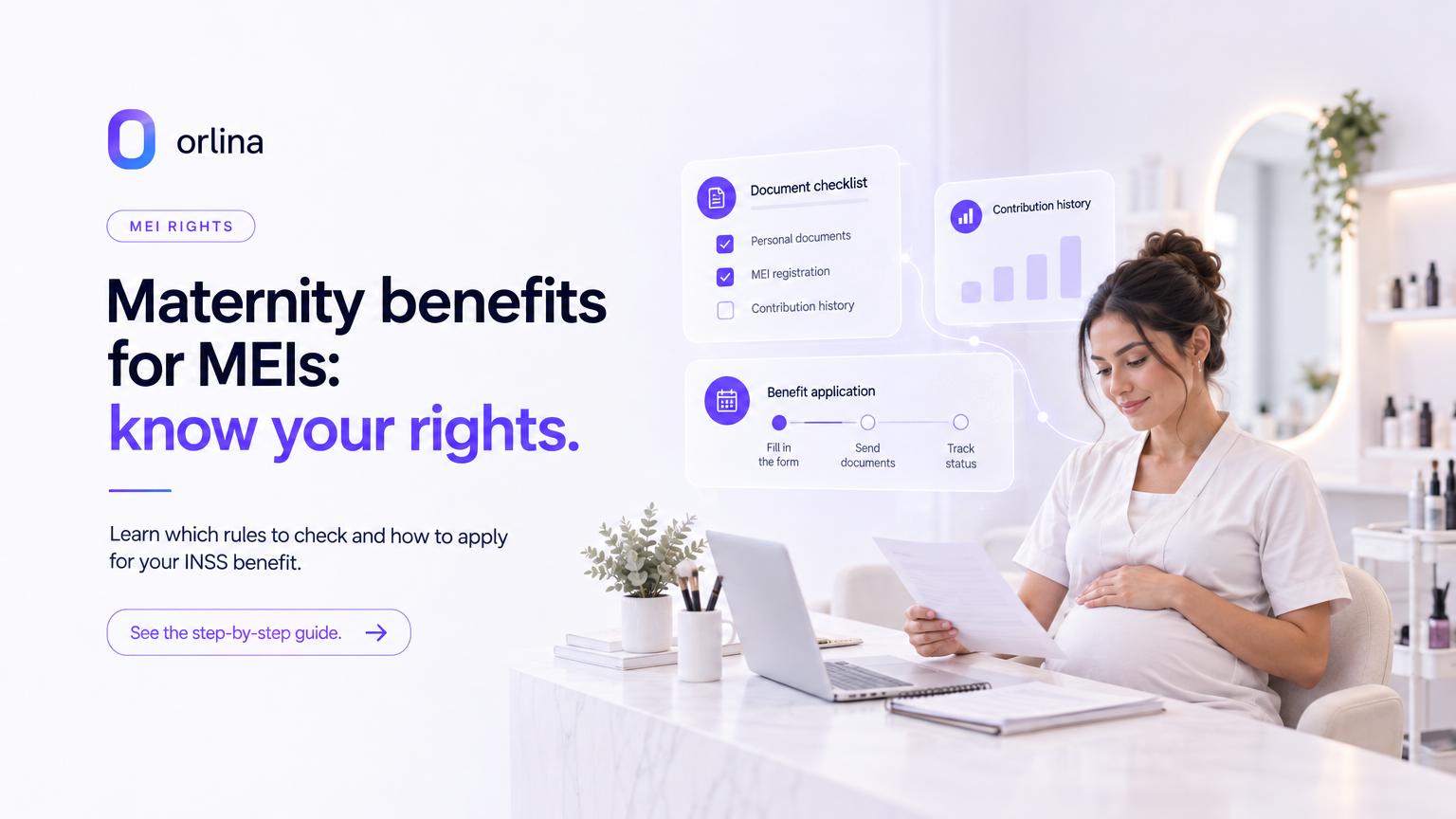
Maternity benefits for the self-employed provide essential financial support for solo professionals who must pause their work due to childbirth, adoption, or foster care. To qualify for these government-funded payments, a self-employed individual must typically meet specific contribution requirements and maintain active social security status before the qualifying event.
The journey of a solo professional—whether a hairstylist, esthetician, or tattoo artist—is marked by multiple challenges, and the arrival of a child brings the urgent need for a financial safety net. Being a formal small business owner or a registered self-employed professional is the gateway to accessing rights that were once exclusive to traditional employees. This support ensures that a temporary break in service delivery does not compromise your livelihood or the future of your brand.
In this comprehensive guide, we will explore every detail of how maternity leave payments work for the self-employed, the legal requirements, timelines, and how you can organize your business during this period using modern management tools.
What are Self-Employed Maternity Benefits?
In many regions, unlike a traditional employee whose company manages the payroll during leave, a self-employed professional receives payments directly from the government’s social security department or a specific labor insurance fund. The benefit consists of monthly payments made during the period the professional is away from their business.
It is vital to distinguish between "maternity leave" and "maternity pay." While leave refers to the physical time taken off from business activities (the right to stop working to care for the baby), the pay is the actual financial compensation. For the self-employed, this distinction is critical because while the physical break is a management choice, receiving the funds depends strictly on complying with specific insurance and contribution rules.
The standard duration of the benefit is usually 120 days (about four months). In specific medical cases, such as non-criminal pregnancy loss, a shorter period (often around 14 days) may apply. For adoption or legal guardianship, the duration is typically the same 120 days, regardless of the child's age, reflecting modern labor laws that prioritize family bonding.
Requirements and Qualifying Periods: The Rules of the Game
To access maternity benefits, simply having a registered business name or tax ID is often not enough. You must understand the concept of a qualifying period (also known as a vesting or waiting period) and insured status.
The 10-Month Qualifying Period
The qualifying period is the minimum number of monthly contributions a person must have paid to be eligible for a benefit. For many self-employed maternity schemes, the law requires at least 10 monthly contributions. This means if you discover a pregnancy today but haven't started paying your social security taxes, you may need to act quickly to ensure you meet the minimum payment count before the birth.
According to global labor standards, the first contribution must often be made strictly on time for the qualifying period to start counting. Late payments might only count toward the period if the professional had already established an active status previously and had not let their insurance coverage lapse.
Insured Status and Grace Periods
"Insured status" means you are currently under the protection of the social security system. You maintain this quality as long as you pay your monthly self-employment taxes. If you stop paying, you might still maintain coverage for a limited time—often called a "grace period"—which typically lasts 12 months after the last contribution, though this can vary by jurisdiction.
| Professional Situation | Benefit Eligibility | Key Observation |
|---|---|---|
| Paying taxes on time | Yes (if period met) | Full rights and protection. |
| Within Grace Period | Yes | Rights are maintained even without a current month payment. |
| Inactive for >12 months | Generally No | Loss of insured status; requires a restart of contributions. |
| Under 10 contributions | No | Except in rare cases of accidents or specific exempted illnesses. |

How to Apply for Benefits (Step-by-Step)
Most modern social security systems have moved to digital platforms, which significantly simplifies the process for an entrepreneur managing a newborn's routine or final pregnancy preparations.
- Access the Social Security Portal: Use the official government website or app dedicated to labor benefits. This usually requires a verified digital identity.
- Start a New Request: Look for "Maternity Benefit" or "Paid Parental Leave" under the new claims section.
- Select the Event Type: Choose whether the claim is for "Birth" or "Adoption/Guardianship."
- Enter Certificate Data: If the child is already born, you will need the birth certificate details, including the registration number and date.
- Attach Documentation: You will likely need to upload clear photos or scans of your ID, tax registration, and proof of address.
- Tracking: After submission, save your protocol or reference number. You can usually track the progress through a "My Requests" or "Status" dashboard.
Pro Tip: If the request is made before the birth (usually allowed up to 28 days before the due date), you must attach a specific medical certificate. Otherwise, it is most common to apply immediately after birth with the birth certificate in hand.
Necessary Documentation
Even if the government system is integrated with civil registries, it is prudent to have the following ready:
- Social Security Number or Tax ID;
- Government-issued photo ID;
- The child’s Birth Certificate;
- Guardianship or adoption papers (if applicable);
- Proof of recent tax payments (in case of system discrepancies);
- Medical certificate (if applying before birth).
Maintaining your status is the first step toward security. To stay organized, many professionals find that scaling from a sole proprietor to an LLC helps in long-term financial and legal planning.
Benefit Value and Continued Tax Obligations
In many simplified tax regimes for the self-employed, the maternity benefit value is tied to the national minimum wage. Since self-employment contributions are often calculated based on this minimum, the insurance return follows the same base.
Do I still pay taxes during the benefit period?
This is a very frequent question. During the months you receive maternity pay, the "pension/insurance" portion of your monthly tax is often deducted directly from the benefit. However, the business owner might still need to pay other small municipal or state taxes associated with their business license. It is essential to check your local "Entrepreneur Portal" or tax dashboard, as these adjustments are often automatic, but failure to pay the non-exempt portions could lead to penalties.
Business Management During Leave
Being a business owner means that if you stop, the revenue stops—or does it? For service professionals like hairstylists and manicures, a physical break is mandatory for recovery and baby care, but the business itself doesn't have to "die."
Revenue vs. Personal Labor
A crucial legal point: many social security systems prohibit the beneficiary from personally performing labor while receiving the benefit. If the agency detects that you are working (for example, by issuing service invoices for work performed by you personally every day), the benefit could be canceled, and you might be asked to return the funds.
However, being a registered business often allows you to have staff. If you have a registered employee, they can continue operating the salon or clinic under your administrative supervision (which typically does not count as direct manual labor). This keeps the doors open and the cash flowing without risking your benefits.

Automating to Retain Clients
The biggest fear for the self-employed is that by the time they return from leave, their clients will have moved on. The solution is digitalization. Using an online scheduling system allows you to keep communication channels open without answering calls while breastfeeding.
With Orlina, you can configure your calendar to be blocked during your leave months but keep a link active so clients can pre-book their appointments for your return. If you use the Pro plan or higher, Gabriel, Orlina’s AI assistant, can handle client inquiries on WhatsApp. He can explain you are on maternity leave and provide the exact date you will be back.
This prevents the client from feeling "abandoned." An automated message from Gabriel might say: "Hi! Sarah is currently on maternity leave enjoying her new baby. She will return to the salon on October 15th. You can already secure your spot for her return week by clicking here: [link]".
Financial Planning for the Period
Since the government benefit might be lower than your usual high-season earnings, many beauty professionals who are used to high turnovers feel the financial pinch. This is why managing working capital is indispensable.
- Build a Reserve: Ideally, save the difference between your average profit and the benefit amount during your pregnancy months.
- Reduce Fixed Costs: If you rent a chair or a room, negotiate a reduced rate with the landlord for the period of total absence.
- Inventory Check: Don't let products with near expiration dates go to waste. Perform a strict cosmetic expiration control before starting your leave.
Additional Rights and Specific Cases
Adoption and Foster Care
Maternity pay also extends to those who adopt or obtain legal guardianship for adoption. The qualifying rules (usually 10 months of contribution) remain the same. Modern laws often ensure the benefit is paid regardless of the child's age to respect the family adaptation period.
Benefits for Self-Employed Fathers
In some jurisdictions, a self-employed father may also be entitled to the benefit in specific situations, such as:
- Death of the mother (the father receives the remaining benefit).
- Adoption or legal guardianship by a single father. The contribution requirements generally follow the same 10-month pattern.
The Importance of Valid Records
The secret to a headache-free approved benefit is having updated social security records. This "statement" lists all your historical tax payments. If you paid but it doesn't show up, there is a synchronization error between the tax office and the social security department. Verify your statement at least once a year. If you find errors, you can request an "Update of Earnings" by attaching your payment receipts.
Organizing Your Return: Post-Leave
Returning to work after 120 days requires mental and technical organization. You won't have the same energy in the first few weeks.
- Gradual Return: Use time blocking (or scheduling exceptions) to avoid overbooking your first week. Reserve larger gaps between clients for unexpected baby needs.
- Client Reactivation: Use Orlina’s intelligence. Clients who haven't visited in a while can be automatically reactivated by Gabriel. 14 days after your scheduled return, the system can send reminders to those who used to be regulars.
- Visual Communication: Use Orlina’s "Share" tab to download "Book with Me" social cards to post on Instagram, officially announcing that your books are open.

Comparison: Formal vs. Informal Self-Employment
Many professionals resist formalizing their business due to the monthly tax cost. However, during vulnerable moments like parenthood, the difference is massive.
| Benefit | Informal Professional | Formal Self-Employed |
|---|---|---|
| Monthly Pay (4 months) | $0.00 | National Minimum Wage |
| Adoption Protection | None | Fully Protected |
| Retirement Credit | None | Yes |
| Disability/Sickness Pay | None | Yes |
| Monthly Cost (approx.) | $0.00 | ~$15 - $20 (region dependent) |
The total value received during 4 months of benefits far exceeds the annual investment made in self-employment taxes. It is, above all, an insurance policy for your life and your business.
Legal Considerations and Expert Tips
According to the International Labour Organization (ILO), maternity protection is a fundamental right that promotes work-life balance and economic security. If there is a delay in your claim analysis (usually over 45 days), most systems allow you to file an official complaint or "ombudsman" request.
Another crucial point: if you have two roles (for example, you are self-employed but also have a part-time W2 job elsewhere), you may be entitled to two sets of maternity benefits, provided you meet the requirements for both regimes. This is because the contributions are independent.
For those in the aesthetics and health sector, where physical contact and biosafety are fundamental, taking leave is also a matter of public health and patient safety. Use this time to stay updated. You can use your rest time to read about sanitization for nail technicians or ventilation and air quality, returning with renewed authority for your clients.
Conclusion
Maternity benefits for the self-employed are more than just a payment; they provide the dignity of pausing the rush of the salon or clinic to experience one of life's most important moments. Advance planning, correct tax payments, and the use of technology to keep the business "alive" during your absence are the pillars of a peaceful maternity period.
Don't leave your business organization for the last minute. The 10-month qualifying period is strict. If you plan to become pregnant or are in the early stages, check your status today and start using an intelligent scheduling system that works for you while you care for what truly matters.
With Orlina, you have the security that your clients will be well-served by Gabriel, receive reminders, and be able to book their return as soon as you are ready, ensuring your revenue normalizes quickly after your leave.
Frequently asked questions
Who pays for self-employed maternity benefits?
Unlike private companies that pay employees and later get reimbursed by the state, for the self-employed, the payment is usually made directly by the government’s Social Security department. The funds are deposited into the bank account provided by the professional during the digital application process.
Can I continue to issue invoices while receiving the benefit?
Invoicing should be handled with caution. If an invoice is for services you personally provided during the 120-day leave period, social security may conclude that you didn't actually take a break and suspend your payments. If you have an employee, the invoice should ideally reflect that the service was performed by them.
What happens if I miss a tax payment during pregnancy?
Missing payments can jeopardize your 10-month qualifying period. If you fall too far behind, you might lose your "insured status" entirely. It is best to keep payments current. If you have arrears, pay them as soon as possible, but be aware that for some benefit calculations, only on-time payments count toward the initial qualifying period.
Do I need a lawyer to apply for maternity pay?
It is not mandatory. Most government portals are designed for the citizen to use directly. However, if your benefit is denied despite meeting the contribution and status requirements, it may be helpful to consult a specialized labor attorney or a legal aid clinic.
Does the benefit apply in cases of pregnancy loss?
Yes. In cases of non-voluntary pregnancy loss (miscarriage) confirmed by a medical certificate, self-employed individuals are typically entitled to a shorter period of maternity pay (often 14 days) to allow for physical and emotional recovery. The application process is similar, selecting the relevant medical event.
This article is for informational purposes only. For specific guidance on your social security case, always consult official government channels or a specialized professional.