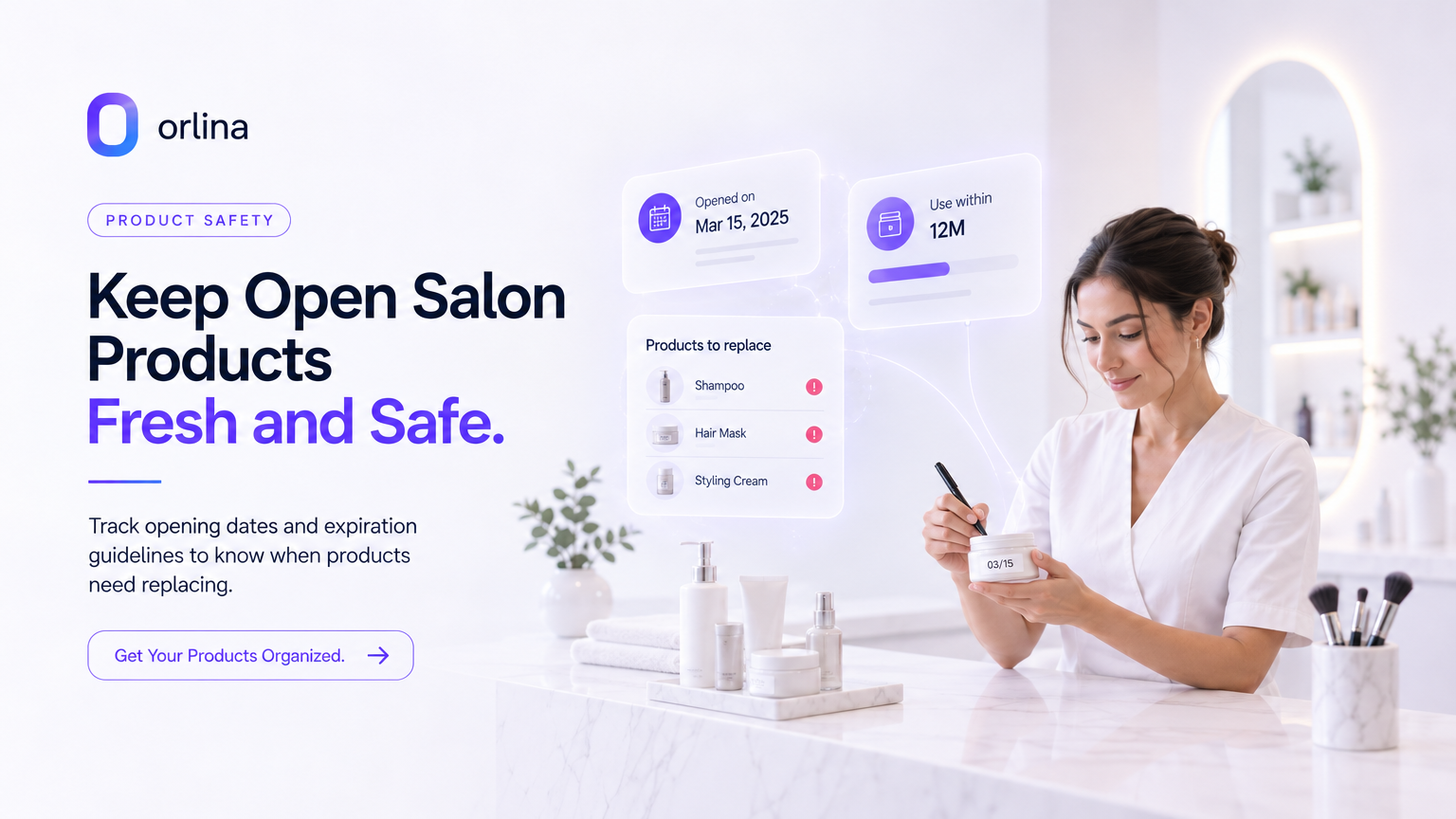
Cosmetic expiration in salons is governed by two distinct factors: the manufacturer’s expiration date for sealed products and the Period After Opening (PAO), which dictates safety once the seal is broken. Using expired products risks client health through chemical burns or infections and can lead to severe legal penalties for the business owner.
Managing a beauty space goes far beyond technique and customer service. There is an invisible yet fundamental pillar that supports the reputation and legal security of any professional: biosafety and the rigorous control of supplies. In the busy day-to-day of a hair salon or barbershop, it is common for dozens of bottles of shampoos, conditioners, dyes, aesthetic acids, and creams to be handled simultaneously. However, what many professionals ignore is that a product within its official shelf life can become unfit for use much sooner than the packaging indicates simply because it was opened.
Maintaining control over these items is not just a matter of organization; it is a matter of respecting consumer health and complying with sanitary regulations. In this comprehensive guide, we will dive into the technical details of cosmetic expiration, understand how to implement an efficient inspection routine, and see how technology can be an ally in your business's overall organization.
The Difference Between Sealed Expiration and Period After Opening (PAO)
One of the most common mistakes in aesthetic centers and barbershops is believing that the only relevant date is the one printed on the bottom of the bottle or the seam of the tube. In reality, two different timers start running the moment a product enters your inventory.
The Manufacturer’s Expiration Date
This is the date determined by stability tests carried out in a laboratory, considering the product sealed and stored under ideal temperature and light conditions. It is the guarantee that, until that day, the active ingredients remain effective and the formula is microbiologically safe, provided the seal has never been broken. According to international standards, it is mandatory for every cosmetic product to present this information clearly.
The Period After Opening (PAO)
Have you ever noticed an icon of an "open jar" with a number followed by the letter "M" (e.g., 6M, 12M, 24M) on labels? This is the Period After Opening. It indicates how many months the product is safe for use after the first contact with oxygen and the external environment.
When we open a cosmetic, it is exposed to microorganisms present in the air and on hands, in addition to the natural oxidation caused by contact with oxygen. In many cases, a cream with an expiration date for 2026 may have a PAO of only 6 months. If you open it in January 2024, it must be discarded in June 2024, even if the date printed by the manufacturer is still far from expiring.
Risks of Using Expired or Degraded Cosmetics
The use of non-compliant products does not only affect the final result of the service (such as a dye that does not take or a straightening treatment that fails) but brings severe risks to the client's physical integrity.
- Contact Dermatitis: The oxidation of chemical components can generate irritants that cause redness, itching, and immediate peeling of the scalp or skin.
- Bacterial and Fungal Infections: Preservatives lose their effectiveness over time. An expired product can become a culture medium for bacteria and fungi, causing folliculitis and other serious infections.
- Chemical Burns: In products with acidic or alkaline active ingredients (such as relaxers and peels), changes in concentration due to evaporation or degradation can make the product excessively aggressive.
- Legal and Sanitary Issues: Using expired products is a serious health violation, subject to heavy fines and closure of the establishment. Furthermore, in case of damage to the client, the professional is civilly liable for the loss caused.
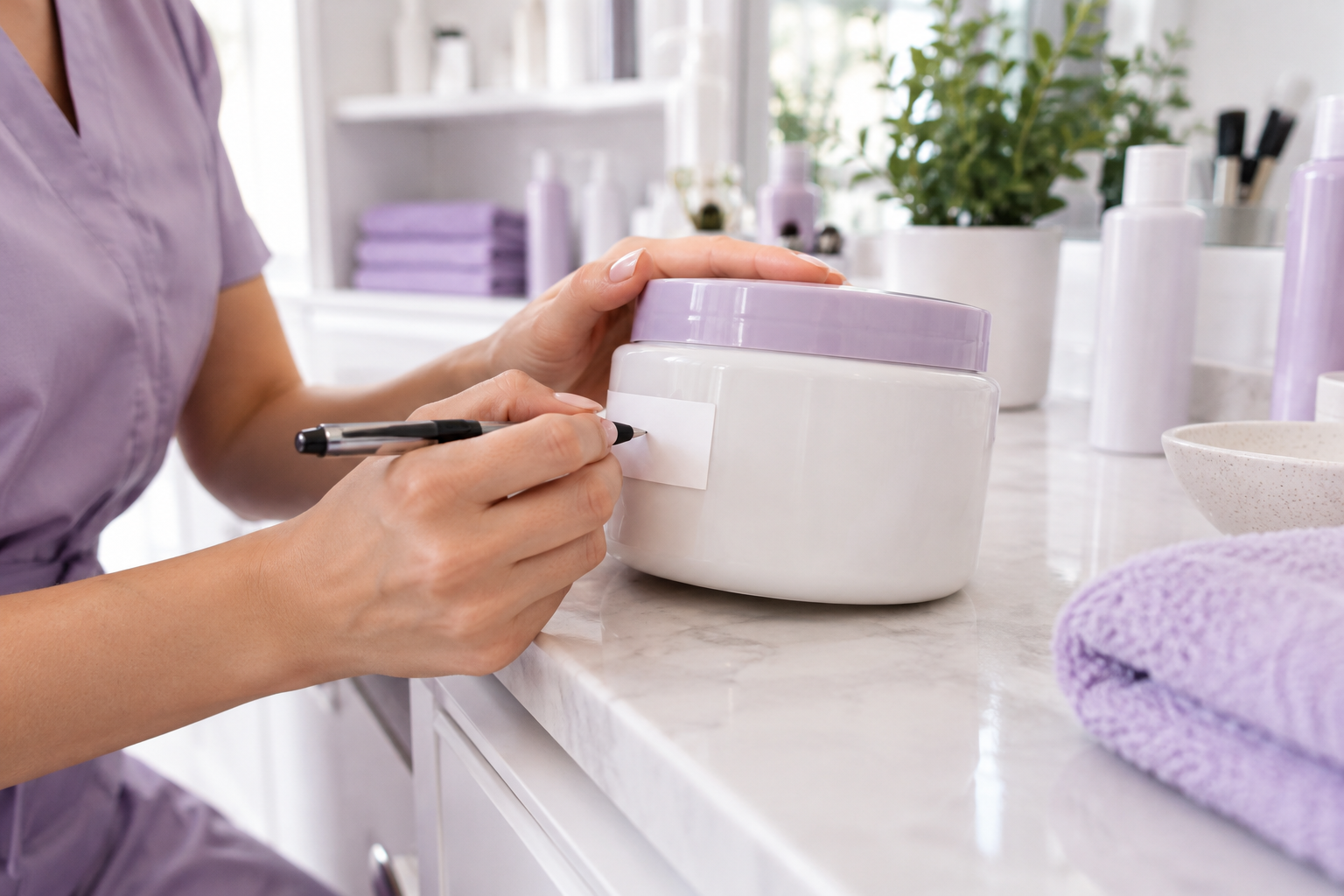
Practical Expiration Control Routine
To prevent products from getting lost in the back of the shelves, it is necessary to establish a standard protocol for entry and use. Physical organization is the first step toward efficient business management.
1. Delivery Screening
As soon as products arrive from suppliers, check if the printed expiration date allows for a reasonable usage time. Avoid buying large stocks of items that expire in less than 6 months unless your client turnover is very high.
2. The Labeling System
Since most products do not come with a space to write down the opening date, you must create your own labels. They should contain:
- Opening Date.
- Use-by Date (based on the PAO or the total expiration, whichever comes first).
- Person responsible for opening (optional, but helps with team control).
3. Strategic Storage
Where you store your products directly influences their durability.
- Light: Avoid shelves that receive direct sunlight, which degrades vitamins and photosensitizes components.
- Humidity: Bathrooms and sink areas are humid. Try to keep the main stock in dry, ventilated cabinets.
- Temperature: Excessive heat accelerates unwanted chemical reactions. Keep products away from sterilizers, autoclaves, and running hair dryers.
How to Read Labels and Identify Alterations
The appearance of a cosmetic can be deceiving. While consumer protection agencies require clarity, correct interpretation depends on the professional.
Sensory Warning Signs
Even within the expiration period, a product can spoil if it is poorly stored or contaminated by dirty spatulas. Stay alert for:
- Odor: A "rancid oil" smell, vinegar, or any change in the original perfume indicates fat oxidation or bacterial proliferation.
- Texture: Phase separation (oil on top and water on the bottom), lumps in creams that should be smooth, or change in viscosity (product too liquid or too sticky).
- Color: Darkening of products with vitamin C, yellowing of white creams, or fading of pigments.
Important: The absence of these signs does NOT guarantee that the product is safe. Many microorganisms do not change the color or smell of the product but are already present at dangerous levels. The golden rule is: if the date on the label or the bottle has passed, it must be discarded.
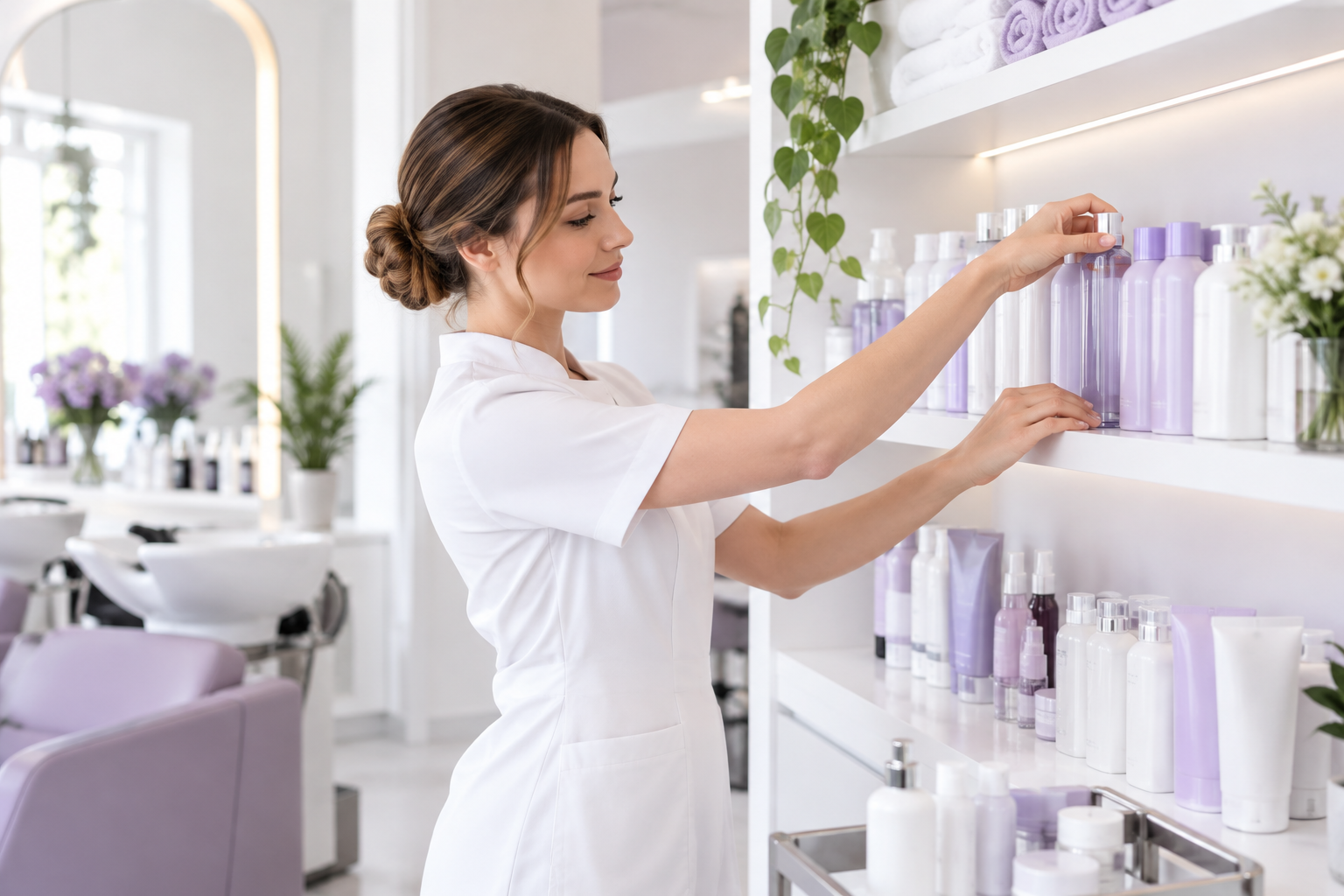
Comparative Table: Expiration vs. Safety
| Product Type | Typical Expiration (Sealed) | Suggested PAO (After Opening) | Warning Signs |
|---|---|---|---|
| Shampoos and Conditioners | 2 to 3 years | 12 to 24 months | Change in odor and viscosity |
| Hydrating Masks | 2 to 3 years | 6 to 12 months | Phase separation and lumps |
| Oxidative Dyes | 3 years | Immediate use (after mixing) | Drastic color change in open tube |
| Acids and Peels | 2 years | 3 to 6 months | Crystallization or color change |
| Nail Polishes | 2 to 3 years | 12 to 24 months | Excessive settling and hardening |
Monthly Inspection Checklist for Salons and Barbershops
To ensure nothing goes unnoticed, reserve the last Monday of the month for a complete sweep. Use this checklist:
- Shelf Check: Remove all items and check the date on the bottom of the bottles.
- Label Audit: Replace illegible labels and discard items with expired PAO.
- Cap Inspection: Clean dry product residue from caps and threads, which can prevent hermetic sealing and facilitate contamination.
- Spatula and Utensil Evaluation: Ensure no human hand touches the contents of large jars directly.
- Proper Disposal: Separate expired products for correct waste disposal, avoiding environmental contamination.
Technology as an Ally in Salon Management
While the physical control of expiration is manual, the organization of time and clientele requires modern tools. A salon that wastes time looking for expired products often also wastes time with disorganized schedules.
To optimize the operation, many professionals use the online scheduling system by Orlina. With it, you organize the customer journey, allowing the team's focus to be on service quality and maintaining safety standards, such as the expiration control we discussed.
When the schedule flows without manual interruptions, there is time left to perform monthly inspections and ensure that each client's history is linked to safe, high-performance products. Furthermore, using the AI assistant Gabriel on WhatsApp helps reduce no-shows, ensuring your stock rotates as planned and products don't sit on the shelf until they expire.
Inventory Organization and the FEFO Method
A technique widely used in logistics that should be applied in your salon is FEFO (First Expired, First Out).
When receiving new products, never place them in front of those already on the shelf. Items with the closest expiration date should always be at hand, in front or at the top of the pile. This prevents a product "forgotten" in the back of the cabinet from expiring before it is even opened, generating a direct financial loss for your business.
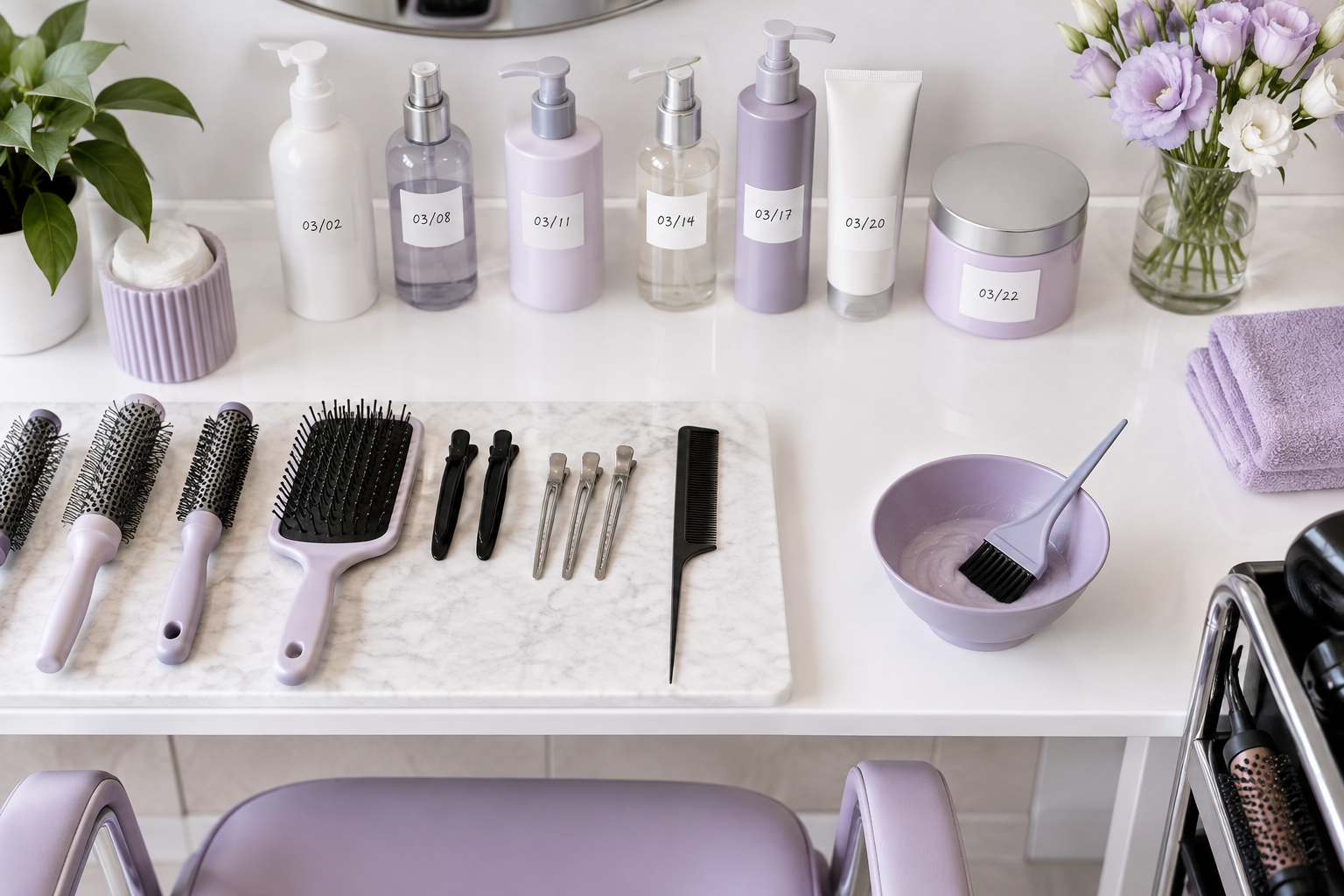
Opening Label Template
You can print small stickers or use common adhesive labels. The ideal layout is simple and direct:
OPENING CONTROL
Product: ____________________ Date Opened: //__ Valid Until (PAO): //__ Notes: ________________________
Always place this label in a visible location, but do not cover the instructions for use or the ingredient list (important in case of allergic reactions to check the composition).
Financial Impact of Poor Cosmetic Management
Having to throw products away because they expired is literally throwing money in the trash. For solo professionals or small beauty entrepreneurs, every cent counts. According to general small business guidelines, efficient management of supplies is one of the pillars of the financial health of the business.
When you don't control expiration:
- Duplicate purchases: You buy an item thinking you don't have it, while a full bottle is expiring at the back of the stock.
- Loss of efficacy: Using products that have already passed the PAO may require more product to achieve the same result, increasing the cost per service.
- Image damage: A single case of allergic irritation from an expired product can generate negative reviews on Google and social media, driving away new customers.
Therefore, investing 30 minutes a week in inspecting your workstation and your stock is not a waste of time; it is profit protection. The physical organization of products must go hand in hand with digital organization. If you already use an online scheduling system, you know how predictability helps you know exactly how much product you will need for the next week, avoiding impulsive purchases.
Biosafety and Health Regulations
Inspection by health authorities in beauty salons and aesthetic clinics is rigorous regarding expiration dates. During an inspection, all open products are checked. If there is no indication of the opening date or if the original period has expired, the establishment is fined.
Maintaining your business compliance depends directly on these daily cares. It is a shared responsibility between the salon owner and partner professionals. Ensure that your agreements specify who is responsible for the replacement and control of supplies, ensuring that the final customer's safety is never neglected.
Conclusion
Controlling cosmetic expiration is an act of care. Care for the client, who trusts their appearance and health to your hands; care for your business, protecting it from fines and lawsuits; and care for your pocket, avoiding waste.
By adopting the practice of labeling each bottle at the time of opening and performing monthly audits, you raise the level of professionalism of your space. Remember: aesthetics and beauty must always walk hand in hand with science and safety.
If you are looking for more ways to professionalize your management and have a more organized daily life, learn how Orlina can transform your schedule and the relationship with your customers. With the right tools, you will have more time to focus on what really matters: the excellence of your technical work.
Frequently asked questions
Can I use a product that expired only a week ago if it looks normal?
No. The expiration date determined by the manufacturer is the safety limit tested in a laboratory. After this date, the effectiveness of preservatives is no longer guaranteed, which allows for the silent growth of bacteria and fungi, even if there is no immediate visual or odor change in the cosmetic.
What should I do if the packaging does not have the "open jar" symbol (PAO)?
When the manufacturer does not indicate the period after opening, the ideal is to follow the main expiration date printed on the bottle. However, for more sensitive products, such as makeup or dermocosmetics, it is recommended to use them within 6 to 12 months after opening, always performing a sensory inspection before each application.
How should I dispose of cosmetic products that have passed their expiration date?
Chemical products should not be disposed of in common trash or domestic sewage, as they can contaminate soil and water. The correct way is to seek guidance on chemical waste disposal from your local government or hire specialized companies for healthcare and aesthetic waste.
Is expiration control mandatory for those who work from home or as a freelancer?
Yes. Consumer protection laws and health regulations apply to any service provision, regardless of the location. Customer safety is a priority, and the professional is legally responsible for any occurrence caused by the use of inadequate or expired supplies.
Can I transfer the product from its original packaging to a smaller one (decanting)?
Decanting is only recommended if the new packaging is sterilized, opaque (to protect from light), and properly labeled with all information from the original label, including batch and expiration. However, the risk of cross-contamination during transfer is high, and it is preferable to use the original packaging.