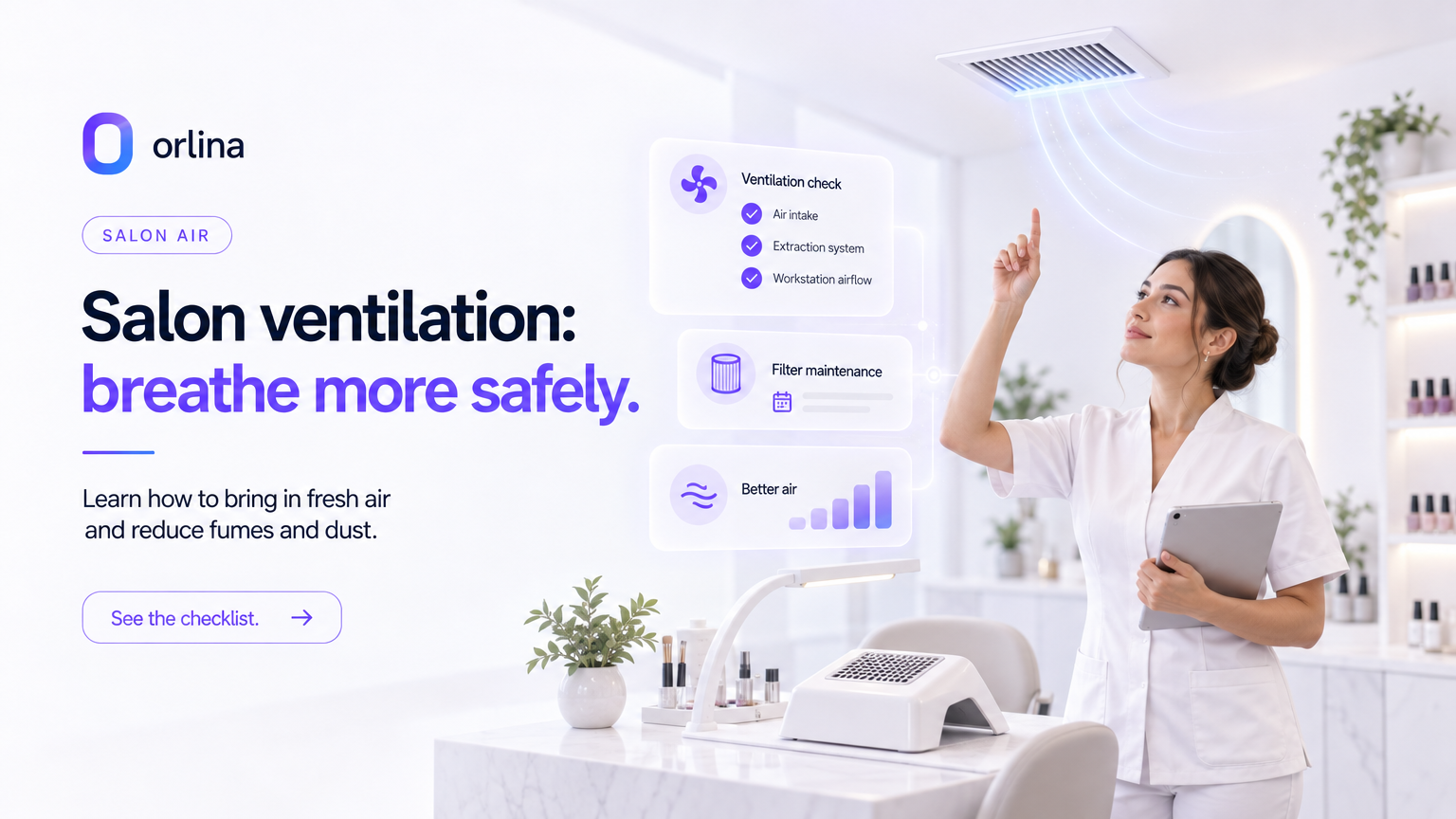
To ensure adequate beauty salon ventilation, you must implement local exhaust systems and constant air renewal because standard air conditioning only cools the air without removing chemical contaminants. Maintaining high air quality protects the health of professionals and clients from respiratory diseases and dermatitis caused by chemical vapors and nail dust. According to international occupational health standards, poor indoor air quality can significantly reduce productivity and increase health-related absenteeism in service environments.
The Critical Importance of Air Quality in Salons and Barbershops
Working in a beauty salon involves much more than aesthetics; it involves daily contact with complex chemistry. From the fine dust resulting from filing gel nails to the vapors from hair straightening and coloring treatments, the air you and your clients breathe is loaded with invisible particles. Beauty salon ventilation is not just a matter of thermal comfort but a fundamental pillar of biosafety.
Many owners believe that installing a powerful air conditioning unit is enough to "clean" the environment. However, there is a crucial difference between climate control (cooling) and air renewal. While air conditioning recirculates indoor air to keep it cold, it ends up concentrating pollutants if there is no fresh air intake. Without proper circulation, odors from nail polishes, removers, and straightening products remain stagnant, potentially causing headaches, dizziness, and airway irritation.
Prolonged exposure to these chemical agents without proper collective protection—which is ventilation—can lead to the development of serious occupational diseases. Therefore, understanding how air moves within your space is the first step toward professional and safe management. Furthermore, complying with health and safety regulations prevents fines and business closures.
Natural Ventilation vs. Mechanical Ventilation
Natural ventilation is the simplest and most cost-effective way to renew air. It occurs through strategic openings, such as windows and doors, that allow fresh air to enter and stale air to exit via wind or temperature differences. In small salons with low chemical loads, opposing windows that create a "cross-breeze" can be effective.
However, natural ventilation is unpredictable. On rainy days, during extreme heat, or in areas with high external noise and atmospheric pollution, windows are often kept shut. This is where mechanical ventilation comes in. it uses equipment like fans, blowers, and exhaust fans to force air exchange.
For a modern beauty salon, the ideal setup is a hybrid or purely mechanical system that ensures the volume of air in the environment is exchanged several times per hour. According to technical standards for commercial buildings, environments with high occupancy and chemical presence require specific renewal rates to keep carbon dioxide (CO2) and pollutant levels under control.
Why Air Conditioning Alone is Not the Solution
This is the most common mistake in beauty business management. Conventional air conditioning units (like Mini-Splits) operate in a closed cycle. They pull warm air from the salon, pass it through filters (which only trap large dust particles, not chemical vapors), cool it, and return that same air.
Imagine the air as water in a swimming pool: if you only chill the water but don't filter it or add clean water, the impurities remain. In the salon, air conditioning merely "chills the poison." Vapors from formaldehyde or ammonia continue to circulate, being breathed repeatedly by the team.
For climate control to be safe, it must be accompanied by an air renewal system (such as an exhaust fan or a dedicated outside air system). Only then do you guarantee that contaminants are being expelled from the building while the environment remains at a pleasant temperature.
![A modern hair salon with large windows open and a subtle mechanical ventilation vent on the ceiling, warm natural lighting]
Local Exhaust Ventilation: The Solution for Nail Dust and Vapors
There are areas in the salon where the concentration of pollutants is much higher, such as the manicure station or the area where hair chemicals are applied. In these spots, general ventilation (from the ceiling or windows) is insufficient because the contaminant disperses before it can be removed.
Local Exhaust Ventilation (LEV) works like a kitchen range hood: it captures the pollutant directly at the source, before it reaches the breathing zone of the professional or the client.
- Manicure Tables: Filing nails generates extremely fine dust that can penetrate deep into the lungs. Tables with built-in exhaust fans or articulated suction arms are essential.
- Chemical Stations: During the application of keratin treatments or hair coloring, using a mobile arm extractor helps suck up the vapors rising from the client's head.
Investing in local exhaustion drastically reduces the need to wear heavy masks all the time and keeps salon furniture cleaner, as dust does not settle on all surfaces.
Identifying Common Contaminants
To improve ventilation, you need to know what you are fighting against. The beauty environment is a chemical "cocktail." Biosafety involves controlling physical, chemical, and biological risks.
| Contaminant Type | Common Origin | Health Risk |
|---|---|---|
| Nail Dust | Filing gel, acrylic, and natural nails | Rhinitis, occupational asthma, eye irritation |
| Solvent Vapors | Nail polish, acetone, removers | Headaches, dizziness, nausea |
| Chemical Gases | Ammonia (color), Formaldehyde (straightening) | Mucosal burns, carcinogenic risk (formaldehyde) |
| Aerosols | Hair sprays, fixatives, perfumes | Respiratory problems, allergic reactions |
| Bioaerosols | Coughing, sneezing, client breathing | Transmission of flu, colds, and viruses |
Air Quality Assessment Checklist
Before hiring a contractor or purchasing equipment, perform this self-assessment of your space:
- Is the "salon smell" (chemicals) noticeable right at the entrance? (If yes, ventilation is insufficient).
- Is there a buildup of fine white dust on manicure stations at the end of the day?
- Do mirrors or windows fog up frequently? (A sign of high humidity and lack of air exchange).
- Does any employee complain of constant headaches or red eyes at the end of the shift?
- Do windows remain closed all day because of the air conditioning?
- Is the bathroom exhaust fan the only mechanical air outlet in the establishment?
If you checked more than three items, your salon needs urgent intervention in its air renewal system.
Environment Planning and Organization
The arrangement of furniture influences how air circulates. Avoid placing high dividers or shelves full of products blocking the path between one window and another. Air needs a "laminar flow" or clear escape routes.
Place the most polluting activities (like chemical straightening) as close as possible to the exhaust outlets. If your salon has high ceilings, use that to your advantage: hot air and vapors tend to rise. Exhaust fans installed near the top of walls are more effective at removing hot, stale air.
Additionally, maintenance of climate control equipment is vital. Dirty air conditioning filters become breeding grounds for fungi and bacteria, which are spread throughout the room every time the unit is turned on. Establish a strict schedule for cleaning and replacing filters. For guidance on keeping your salon equipment in top shape, see our salon and barbershop equipment preventive maintenance guide.
![A technician cleaning the filters of a ceiling-mounted air conditioning unit in a barber shop, focused on the task]
Technical Standards and Legal Requirements
Internationally, health and safety executive bodies establish criteria for the operation of salons. Maintaining a safe workplace is a legal requirement in most jurisdictions.
Technical standards, such as those from ASHRAE (American Society of Heating, Refrigerating and Air-Conditioning Engineers), provide the primary references for air quality in conditioned environments. They stipulate that there must be a minimum outdoor air renewal to dilute pollutants. In many regions, a maintenance plan for large climate systems is mandatory to ensure the air is healthy for occupants.
Do not try "DIY solutions" like pointing a desk fan out the door. This can actually make the situation worse by blowing dust around before it exits. Consulting a qualified professional (mechanical engineer or HVAC technician) is the safe way to size exhaust fans correctly.
The Role of Technology in Salon Management
Improving physical infrastructure is essential, but time organization also helps air quality. By using an online scheduling system, you can avoid overcrowding the space.
Too many people inside the salon at the same time means more CO2, more body heat, and more chemicals being used simultaneously. With organized scheduling, you distribute services better throughout the day, allowing the ventilation system to handle the pollutant load without being overwhelmed.
Using Gabriel, Orlina's AI assistant, helps maintain this fluidity. He can answer client questions about safety protocols or the duration of chemical services, helping you plan intervals between treatments. This ensures the air has time to be renewed between high-intensity services. To understand how automation can free up your time to focus on these structural improvements, consider how Gabriel handles the front desk.
Practical Daily Tips
While you plan for major renovations, some measures can be adopted immediately:
- Cap Containers: Keep bleach powder pots, acetone bottles, and dyes closed whenever they are not in use.
- Correct Disposal: Use trash cans with lids and foot pedals to dispose of cotton soaked in solvents. This prevents odors from evaporating into the salon. For more on sanitation, check our manicure nipper sterilization guide.
- HEPA Filter Air Purifiers: While they do not replace ventilation, portable purifiers with high-efficiency filters and activated carbon can help remove fine particles and some odors in critical areas. Check your cosmetic expiration dates to ensure no old products are contributing to air toxicity.
- Plants: Some species help filter toxins from the air. Snake plants and Spider plants are resilient and help with the aesthetics and freshness of the environment.
Ventilation and Energy Efficiency
Improving ventilation doesn't have to mean an astronomical electricity bill. Well-planned natural ventilation strategies reduce the need for air conditioning on mild days. Furthermore, modern exhaust fans are highly efficient and consume little energy compared to the health benefits they provide.
Well-maintained climate systems work with less effort. A clean filter allows the air conditioner motor to operate optimally, saving money at the end of the month.
Conclusion
Investing in beauty salon ventilation is investing in the longevity of your career. Breathing clean air reduces fatigue, improves team morale, and conveys an image of professionalism and care to the client. A strong chemical smell should not be your business's "trademark"; on the contrary, an environment with fresh, clean air is a luxury competitive advantage in today's market.
Remember that technology is your ally not just in climate control, but in management. Having an organized schedule with Orlina allows you to control the flow of people and ensure your salon is always a safe and pleasant place to be.
![A business owner showing a digital dashboard on a tablet to a professional technician in the salon, bright lighting]
Frequently asked questions
Does air conditioning help remove formaldehyde or ammonia smells from the salon?
No, standard air conditioning only recirculates indoor air and cools the room. To remove chemical odors and toxic vapors, it is essential to have an air renewal or exhaust system that pushes stale air out and brings fresh air in.
What is the difference between air renewal and natural ventilation?
Natural ventilation relies on openings like windows and doors for air exchange via wind. Air renewal is a process (usually mechanical) that ensures the constant exchange of a room's air volume with filtered outside air, following health standards.
Do I need a specific exhaust fan for manicures?
Yes, the ideal setup is a table-top exhaust fan or a dust collector. The dust generated by filing nails (especially gel and acrylic) is very fine and remains suspended in the air. A local exhaust captures these particles before they are inhaled.
How do I know if my salon's ventilation meets health standards?
You should consult your local occupational health and safety regulations. The best approach is to hire an HVAC technician to measure the air exchange rate and verify if your system meets the requirements for your specific services.
Can plants in the beauty salon replace a ventilation system?
No. While some plants help filter small amounts of pollutants, they do not have the capacity to handle the heavy chemical load of a professional beauty salon. They serve as an aesthetic and psychological complement, but safety depends on efficient mechanical or natural ventilation.