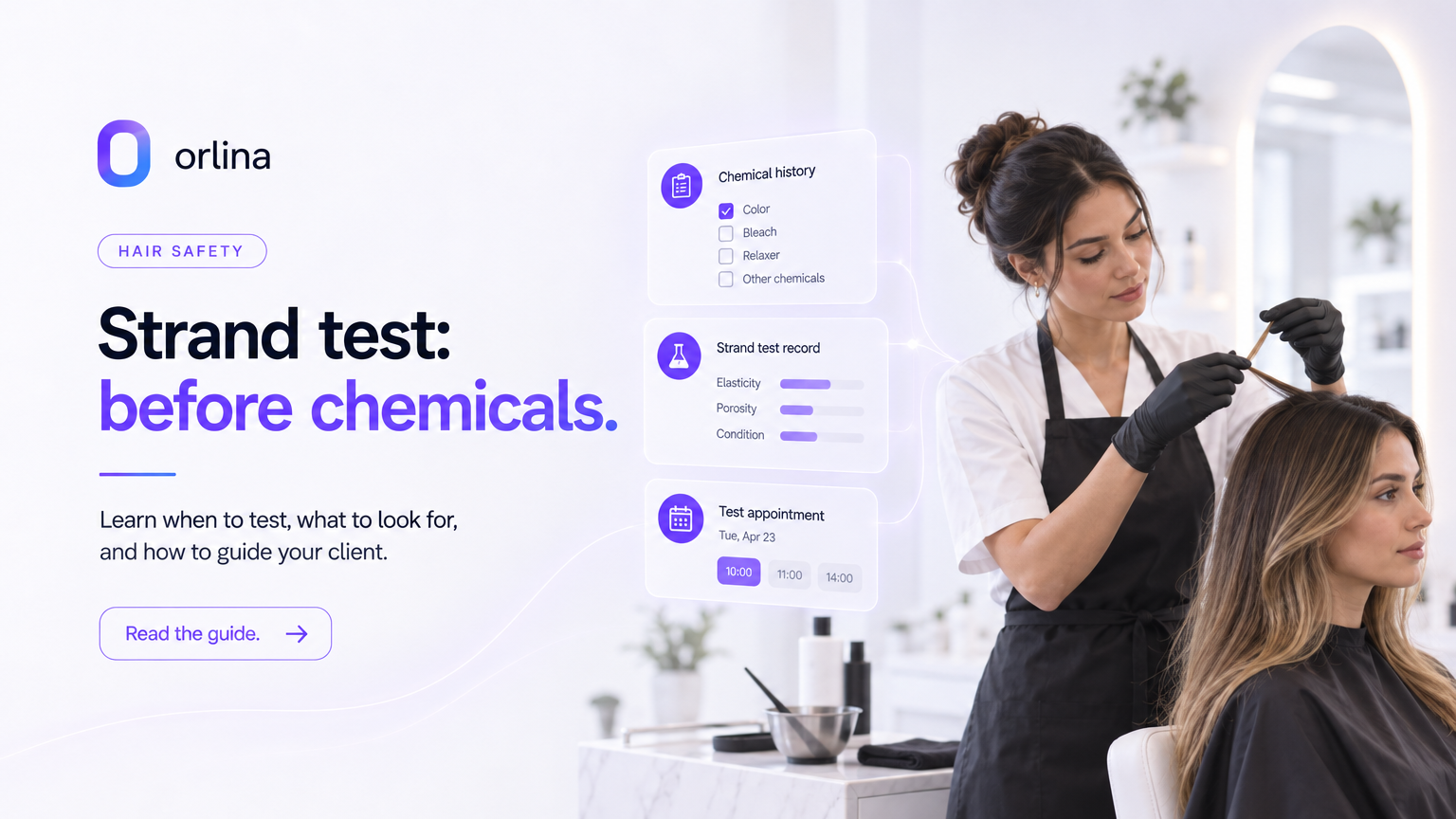
The hair strand test is the most critical preventive procedure before any chemical hair transformation, serving to evaluate fiber strength and compatibility with previous chemical residues. By isolating a small section of hair, professionals can anticipate adverse reactions like chemical breakage or excessive porosity, ensuring the client's hair integrity. According to industry standards, technical safety and service quality are the primary drivers of client retention in the beauty industry, making the strand test an indispensable risk management protocol.
Why the Strand Test is Non-Negotiable in Salon Routine
Many professionals, in the daily rush or due to overconfidence in brands they have used for years, end up skipping the strand test. However, this is a mistake that can be costly—both for the client's hair health and the establishment's reputation. The strand test isn't just about seeing if the color "takes," but rather about understanding the internal structure of the hair under chemical stress.
Every head of hair has a unique history. A client might have used a box dye at home, had a keratin treatment months ago, or even have residues of heavy metals from shower water or swimming pools. When these components come into contact with lighteners or relaxers, the reaction can be catastrophic. Without the test, the professional is working "blind."
Beyond technical safety, there is the legal and professional factor. Documenting that a test was performed and that the hair showed resistance protects the specialist in case of later complaints. It is a demonstration of care that differentiates an amateur from a true hair health expert. By adopting a professional beauty consultation form, the stylist consolidates this information, creating a secure history for every appointment.
Strand Test vs. Patch Test: Understanding the Difference
It is common to confuse these two procedures, but they have completely different objectives and methodologies. One does not replace the other, and both should be part of your safety protocol.
The strand test focuses on the hair shaft. Its goal is to verify if the hair can withstand the chemical without breaking, becoming "gummy," or suffering drastic texture changes. It evaluates chemical compatibility. If a client has metallic dye residues and tries to bleach, the strand test will reveal heating or fragmentation of the hair before the product is applied to the entire head.
On the other hand, the patch test (or skin sensitivity test) focuses on the skin. It aims to identify potential allergic reactions or skin irritations to the formula's components, such as PPD (paraphenylenediamine), common in hair dyes. Generally, a small amount of product is applied behind the ear or in the crook of the elbow, waiting for the time determined by the manufacturer (usually 24 to 48 hours) to observe if there is redness, itching, or swelling.
It is crucial to understand that a passed strand test does not guarantee the client won't have an allergy, just as a negative patch test does not guarantee the hair won't suffer a chemical cut. These are different layers of protection that must coexist.
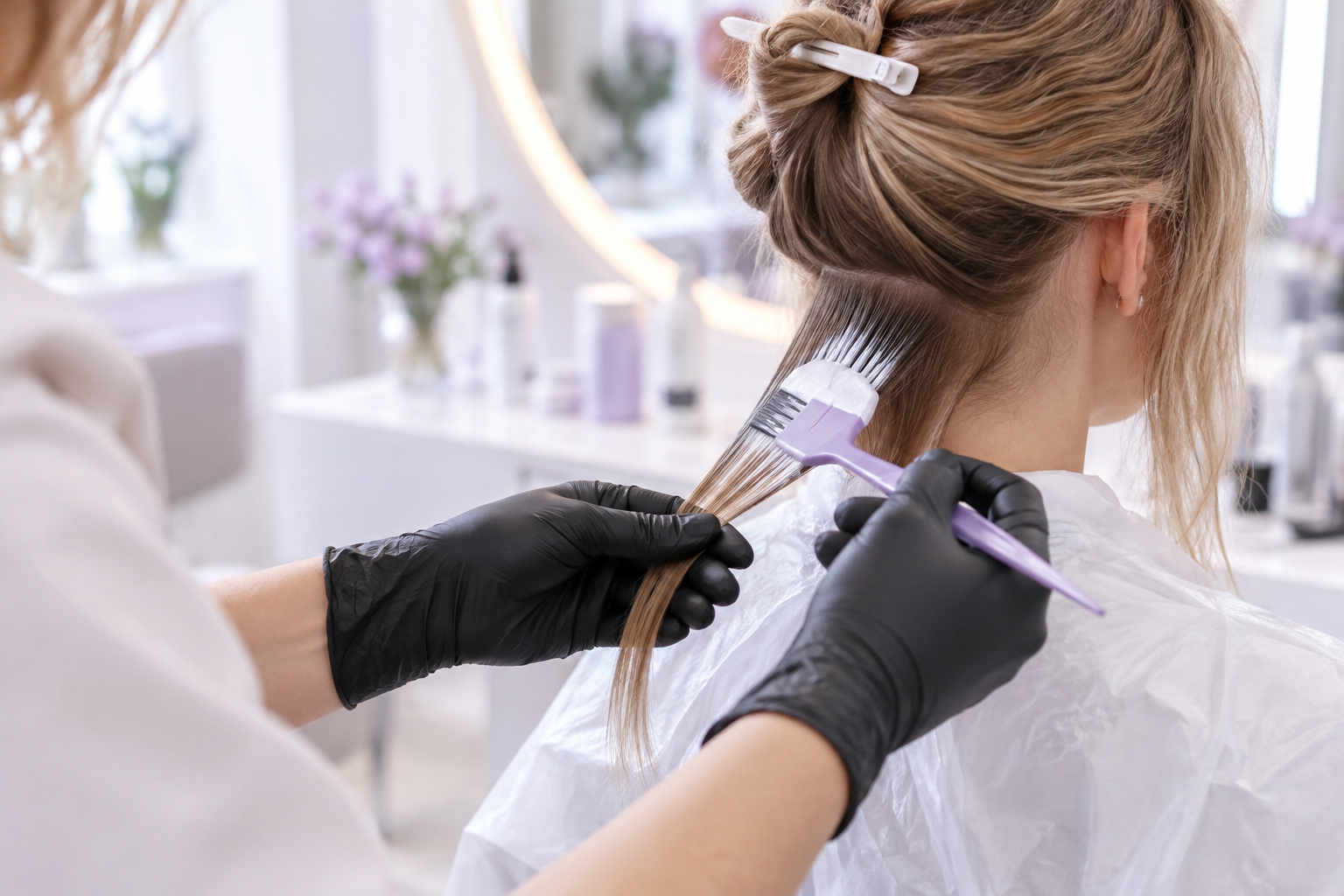
How to Perform a Professional Strand Test: Step-by-Step
There is no "universal protocol" for mixing, as each manufacturer has its own instructions for dilution and processing time. The secret to a well-done test is fidelity to what will be done in the actual procedure.
- Strand Selection: Choose a section in the nape area or at the crown (where hair is often more exposed to external damage). The nape is ideal for hiding the test, but the crown better reflects the state of the most fragile areas.
- Product Preparation: Prepare the mixture exactly in the proportion you intend to use on the whole head. If you're going to use 20-volume developer, don't test with 30-volume "just to be safe," as the result will be false.
- Application: Apply the product along the entire length of the isolated strand, maintaining a safe distance from the root as indicated by the manufacturer.
- Monitoring: Do not leave the strand unattended. Check every 5 to 10 minutes for temperature (if the strand gets hot, remove it immediately) and hair elasticity.
- Finishing and Washing: Respect the maximum processing time. After the time is up, wash the strand, remove all product, and dry it. The real result is only visible with dry hair.
What to Look for in the Evaluation?
When evaluating the strand after the test, the professional should look for warning signs:
- Excessive Elasticity: If the hair stretches and doesn't return, or returns "shriveled" (the bubblegum effect), the hair lacks structure.
- Breakage: If the hair snaps when combed or lightly pulled.
- Unexpected Color Change: Persistent greenish or orange tones that indicate metallic or chemical incompatibility.
- Porosity: If the hair becomes extremely rough and opaque.
Comparison: Strand Test vs. Patch Test
To make it easier to visualize the differences, we have prepared the table below with the main points of distinction between the processes.
| Criterion | Strand Test | Patch Test (Sensitivity) |
|---|---|---|
| Focus | Hair shaft (hair strand) | Skin (scalp and dermis) |
| Objective | Check resistance & chemical compatibility | Identify allergic reactions (dermatitis) |
| Application Site | Nape or crown of the head | Behind the ear or inner elbow |
| Observation Time | According to product processing time | Usually 24h to 48h before |
| Main Risk Avoided | Chemical cut, melting, and porosity | Swelling, itching, chemical burns, anaphylaxis |
Recording Information: The Professional's Legal Security
Performing the test and not recording it is almost the same as not doing it from a management perspective. The record serves for future reference and for protection in case of incidents. According to general business standards for service providers, transparency with the consumer is a professional duty.
Your records should include:
- Date and time of the test.
- Product used (brand, batch, developer volume).
- History reported by the client (even if she says she hasn't done anything, write "client denies chemical procedures in the last 6 months").
- Observed result (resistance, lift, texture).
- Client's signature acknowledging the result.
This organization is part of efficient digital management, where you centralize each client's information for quick consultation in future appointments.
How to Talk to the Client When the Hair Fails the Test
This is one of the most delicate moments for a beauty professional. The client arrives with high expectations, often inspired by social media photos, and receives the news that her hair will not withstand the desired procedure.
The approach should be technical yet empathetic. Instead of just saying "it can't be done," explain why.
- Be Visual: Show the test strand to her. Let her feel the "elastic" texture or see the breakage. Visual evidence reduces frustration and increases trust in your authority.
- Offer a Solution: Don't let the client leave empty-handed. If the hair can't handle highlights today, it needs a treatment plan. Propose a bond-building or hydration treatment and schedule a new test for 30 days from now.
- Explain the Risks: Make it clear that proceeding would result in permanent damage that would cost much more (in time and money) to correct later.
Handling this situation with professionalism prevents the client from seeking another salon that might agree to do the service "at any cost," which will inevitably lead to a hair disaster. Honesty is the best long-term marketing tool.
Reserving Time in the Calendar for Evaluation
One of the main reasons for neglecting the strand test is a lack of time. If you book a full bleach service and only discover the hair can't handle it when the client is already in the chair, you've lost a massive block of hours in your schedule that could have been filled by another service.
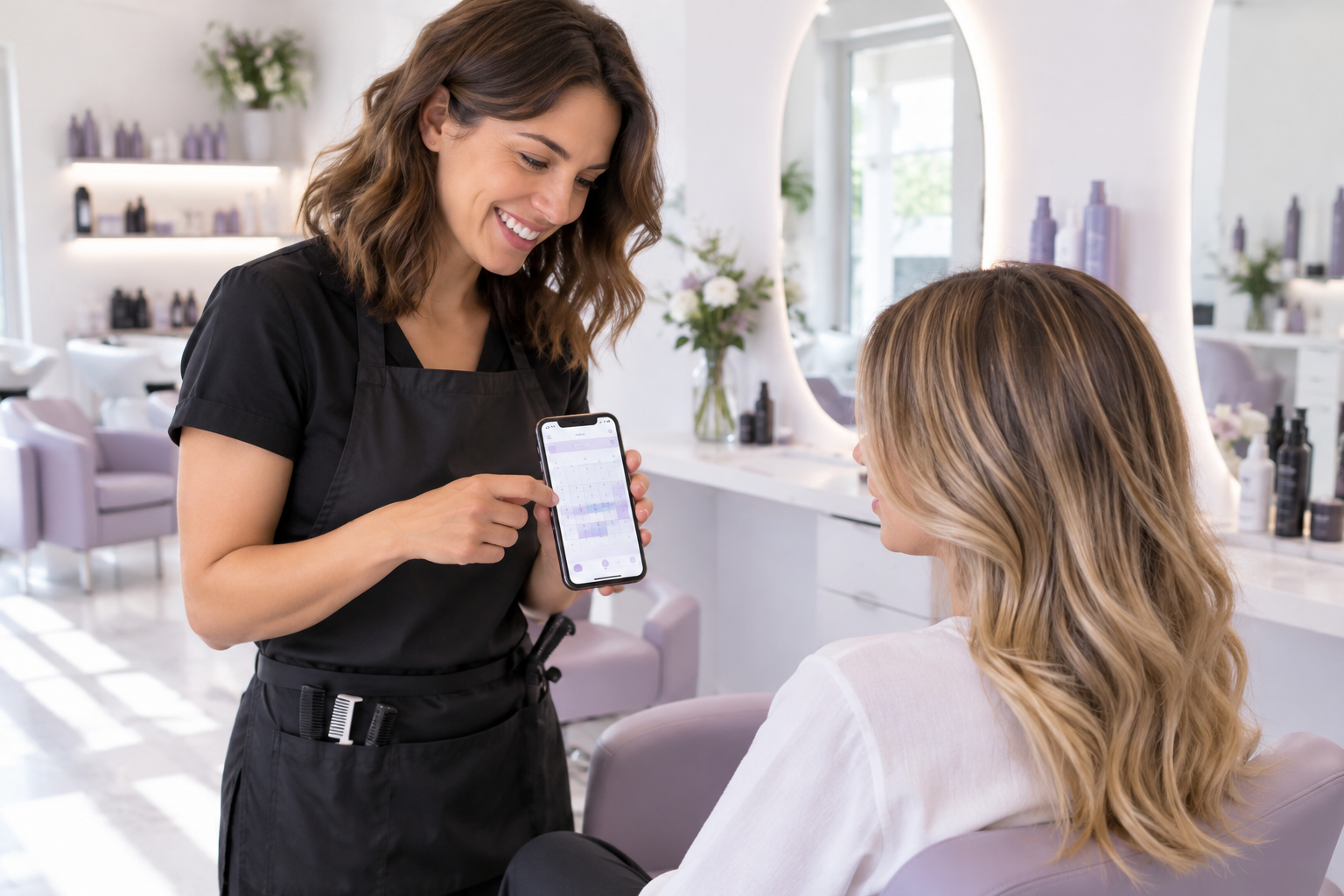
The solution is to integrate the strand test into your smart scheduling process. Some effective strategies include:
- Mandatory Pre-Evaluation: For complex chemical procedures, require the client to come to the salon a few days before the test. This takes only 30 minutes and ensures the day of the chemical service is productive.
- Using AI for Screening: Tools like Gabriel, Orlina's AI assistant, can be configured to send reminders or even ask about the client's chemical history at the moment of booking, alerting the professional to the need for a strand test.
- Time Blocking: If the test is done on the same day, reserve the first 40 minutes just for this evaluation before you start preparing the main mixtures. If you use an online scheduling system, you can set these buffer times to avoid cascading delays.
The Financial Impact of "Empty Chair Cost"
When a strand test fails and you don't have a plan B, that slot in the calendar becomes a loss. Understanding the real impact of an empty chair helps you value the evaluation moment.
Many professionals choose to charge a nominal fee for the strand test and evaluation, which can be applied as a discount if the main procedure is performed. This filters out "window shoppers" and values the professional's technical time. Furthermore, if the hair fails, you can offer an immediate treatment service, ensuring the slot isn't totally lost and the client begins hair recovery right away.
Organization with Orlina: How Technology Helps Hair Safety
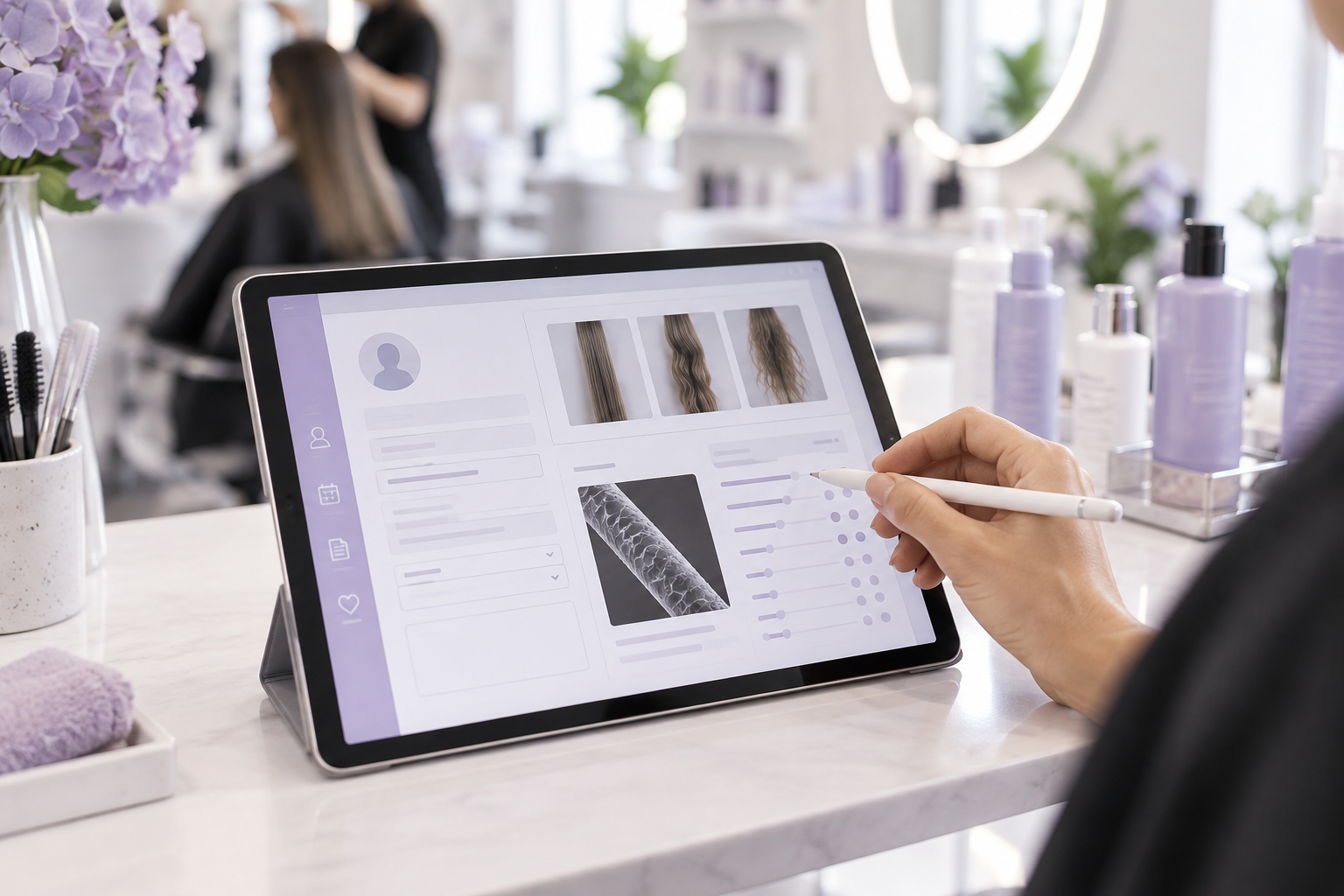
Keeping an organized history of strand and patch tests is a challenge with paper planners. With Orlina, you have a complete customer base where you can record every detail.
- Centralized History: In each client's profile under the Customers tab, you can add notes about tests performed, products that caused a reaction, and the evolution of hair health.
- Automated Communication: Clients on the Pro plan or higher ($49/month) have Gabriel on WhatsApp. He can send reconfirmation reminders 2 hours before, ensuring the client doesn't miss the strand test, reducing no-shows.
- Flexibility: If a strand test fails and you need to reschedule the main service for next month after a treatment, Gabriel understands natural commands like "cancel" or "change to the 20th" directly via the client's WhatsApp, freeing up the slot in your grid instantly for new bookings.
Having a professional booking link also allows you to include the mandatory pre-test requirement in the service instructions, educating the client before they even arrive at the salon.
Conclusion
A strand test is not a suggestion; it is an ethical and technical obligation for every professional dealing with chemical transformations. It is the bridge between the client's desire and the hair's possible reality. By adopting rigorous evaluation, recording, and communication protocols, you not only avoid hair disasters but build a reputation for authority and trust.
Technology, through systems like Orlina, acts as an ally in this journey, organizing your time, records, and communication so you can focus on what really matters: the art of transforming hair safely.
Remember: it is better to have a client frustrated by a service not performed than a client desperate because of destroyed hair. The integrity of your work is your greatest asset.
Frequently Asked Questions
Should a strand test be done at every client visit?
Yes, because hair health and the products used at home can change between appointments. Even loyal clients might have used something that causes incompatibility, making the test indispensable for every new chemical service.
How long should I wait to evaluate the final result of the strand test?
Ideally, you should observe the immediate reaction during application and processing, but the final evaluation must be done with the strand washed and dried. Blow-dryer heat and brush tension reveal damage that wet hair can camouflage.
Can I do the strand test on the same day as the coloring or bleaching?
Yes, it is possible, provided you reserve the necessary time for processing and evaluation before mixing the rest of the product. However, for very aggressive processes or fragile hair, doing the test a few days prior is safer.
What should I do if the client refuses to have a strand test?
The professional has the right and ethical duty to refuse the service. Performing a chemical treatment without a test means assuming total responsibility for any damage, which can lead to severe financial and legal consequences for the salon.
Does a strand test guarantee there will be no breakage during the full procedure?
The test is a highly reliable indicator, but it is not a 100% absolute guarantee. Factors like ambient temperature, uneven application, or accidental product overlap on non-tested areas can influence the result, which is why constant monitoring throughout the service is essential.