Pest control in beauty salons and barbershops is essential for maintaining biosafety standards and ensuring compliance with local health regulations. To prevent infestations of cockroaches, ants, and rodents, business owners must seal drains and cracks, keep product storage elevated off the floor, and strictly isolate food areas from service zones. Implementing rigorous preventive measures reduces the risk of cross-contamination and protects your professional reputation.
The Importance of Rigorous Hygiene and Integrated Pest Management (IPM)
In the beauty and wellness industry, image is everything. However, a salon's aesthetic goes far beyond the decor or the quality of a haircut. "Invisible hygiene"—the practices that ensure an environment is free from vectors and pests—is what sustains the safety of both professionals and clients. Cockroaches, ants, and rodents are not just a visual nuisance; they are vectors for serious diseases such as salmonellosis, leptospirosis, and various respiratory allergies triggered by insect fragments in the air.
The modern standard for handling this challenge is Integrated Pest Management (IPM). Unlike the outdated approach of simply "spraying poison," IPM focuses on prevention, early identification, and strategic control. Beauty salons and barbershops are naturally attractive to certain pests due to the constant presence of water, organic waste (like hair and skin cells), and often, coffee or snack areas provided for clients.
Maintaining a clean and organized environment is the first step, but understanding the biology of these pests is crucial for effective combat. Ants, for example, are attracted to tiny crumbs and can contaminate sterilized tools. Cockroaches seek moisture and darkness, often hiding behind mirrors or inside towel cabinets. Rodents look for access points in ceilings and door gaps. Ignoring these signs can lead to heavy fines and even the closure of the establishment during a health inspection.
Identifying Signs of Infestation in the Salon
Often, an infestation begins silently. Professionals busy with a packed schedule might not notice the first signs until the problem becomes apparent to a client—which would be a disaster for the brand. Therefore, constant vigilance is essential.
Common signs of pests include:
- Droppings: Small black spots (resembling black pepper) in comb drawers or shelf corners indicate cockroaches. Larger, cylindrical droppings indicate the presence of rodents.
- Characteristic Odors: Cockroaches and mice leave specific, musty smells in enclosed spaces.
- Structural Damage: Gnawed papers, chewed dryer cords, or teeth marks on chemical packaging are clear signs of rats.
- Presence of Dead Insects or Body Parts: Finding termite wings or cockroach carcasses indicates an active colony nearby.
- Ant Trails: Small lines of ants near the coffee machine or reception desk indicate a source of food or water is attracting them.
Early detection allows for less invasive intervention. If you notice any of these signs, it is time to act immediately before the reproduction of these species gets out of control.
Risk Factors: Drains, Cracks, and Storage
To prevent the entry of unwanted visitors, you must look at the salon through the eyes of a pest. Where there is shelter, water, and food, they will settle.
Drains and Plumbing
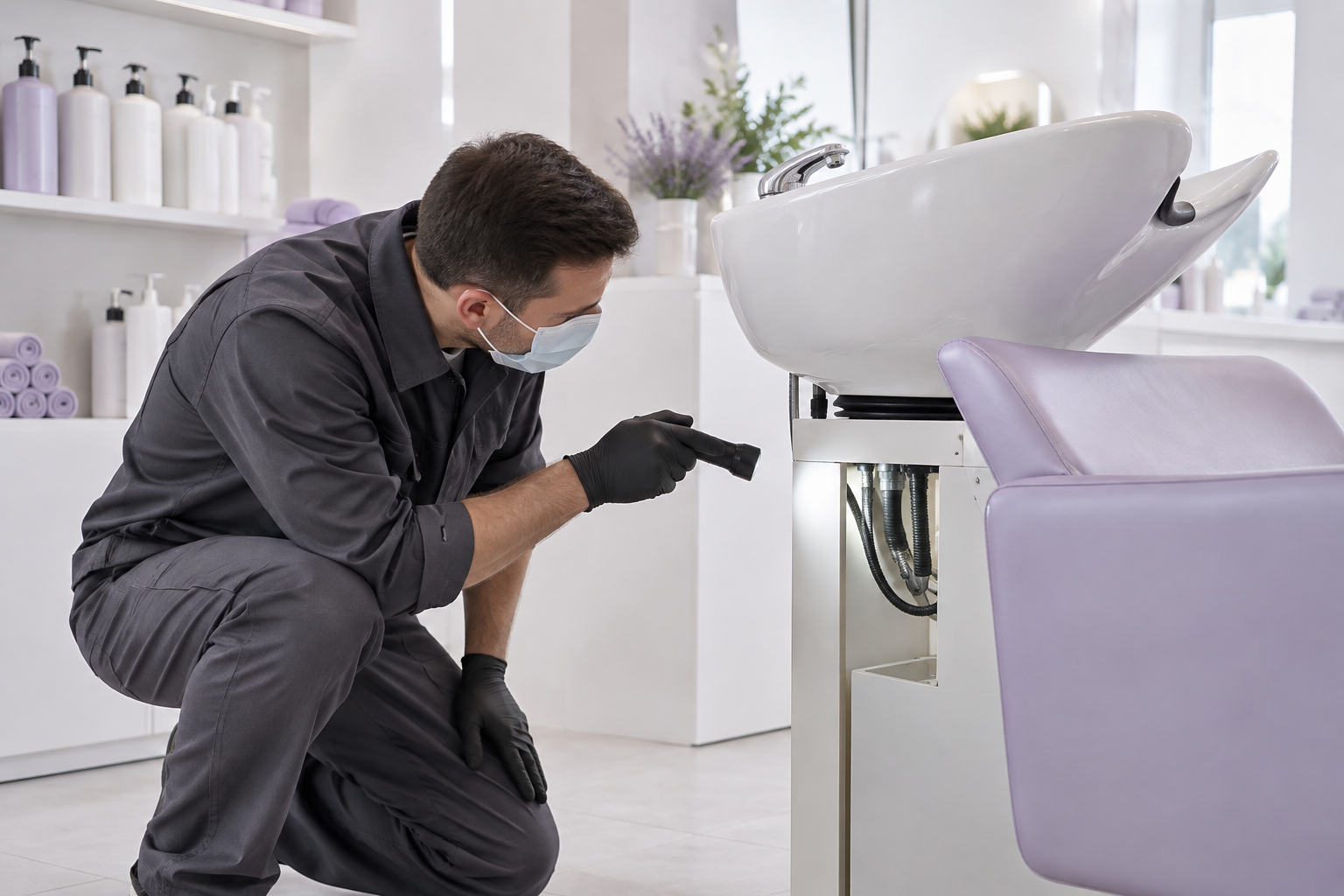
Drains are the primary entry point for American cockroaches (Periplaneta americana). In beauty salons, the accumulation of hair and chemical residues in pipes can create a layer of grease and debris that serves as food. Using drains with "open/close" systems or protective screens is mandatory to prevent access. Additionally, periodic cleaning of grease traps and siphons is a task that cannot be neglected.
Cracks and Hidden Structures
Salons often have custom furniture, glued mirrors, and drywall partitions. These empty spaces behind structures are perfect hiding spots. Sealing gaps between the sink and the wall with silicone, ensuring baseboards are well-fixed, and installing rubber door sweeps are simple measures that block insects and rodents coming from the street or neighboring businesses.
Towel and Product Storage
Damp towels stored in poorly ventilated areas invite mold growth and attract moisture-seeking insects. Ideally, towels should be washed and dried completely before being stored in closed, clean cabinets. To understand more about textile hygiene, see our guide on how to wash salon towels.
Waste Management and Food Areas
Correct waste management is perhaps the most critical point of pest control. Clipped hair, leftover coloring products, and bathroom waste must be disposed of properly. The accumulation of hair, though seemingly harmless, can serve as nesting material for rodents and, if mixed with organic waste, attracts flies and cockroaches.
According to biosafety guidelines, trash cans should be made of easy-to-clean material, have a lid, and preferably be foot-pedal operated to avoid hand contact with the waste. Disposal should be done daily, and trash bags should never be left open or leaning against external walls overnight. For more on equipment hygiene, check our preventive maintenance guide.
The food area, whether for staff or as a "treat" for the client (coffee, cookies), must be strictly separated from the service area. Sugar spills near the reception attract ants instantly. Using hermetically sealed containers and immediate cleaning after consumption are golden rules.
Comparison of Preventive vs. Corrective Measures
| Focus Areas | Preventive Measure (Daily/Weekly) | Corrective Measure (Specialized Company) |
|---|---|---|
| Drains and Sinks | Use of screens and siphon cleaning | Insecticide gel application and chemical cleaning |
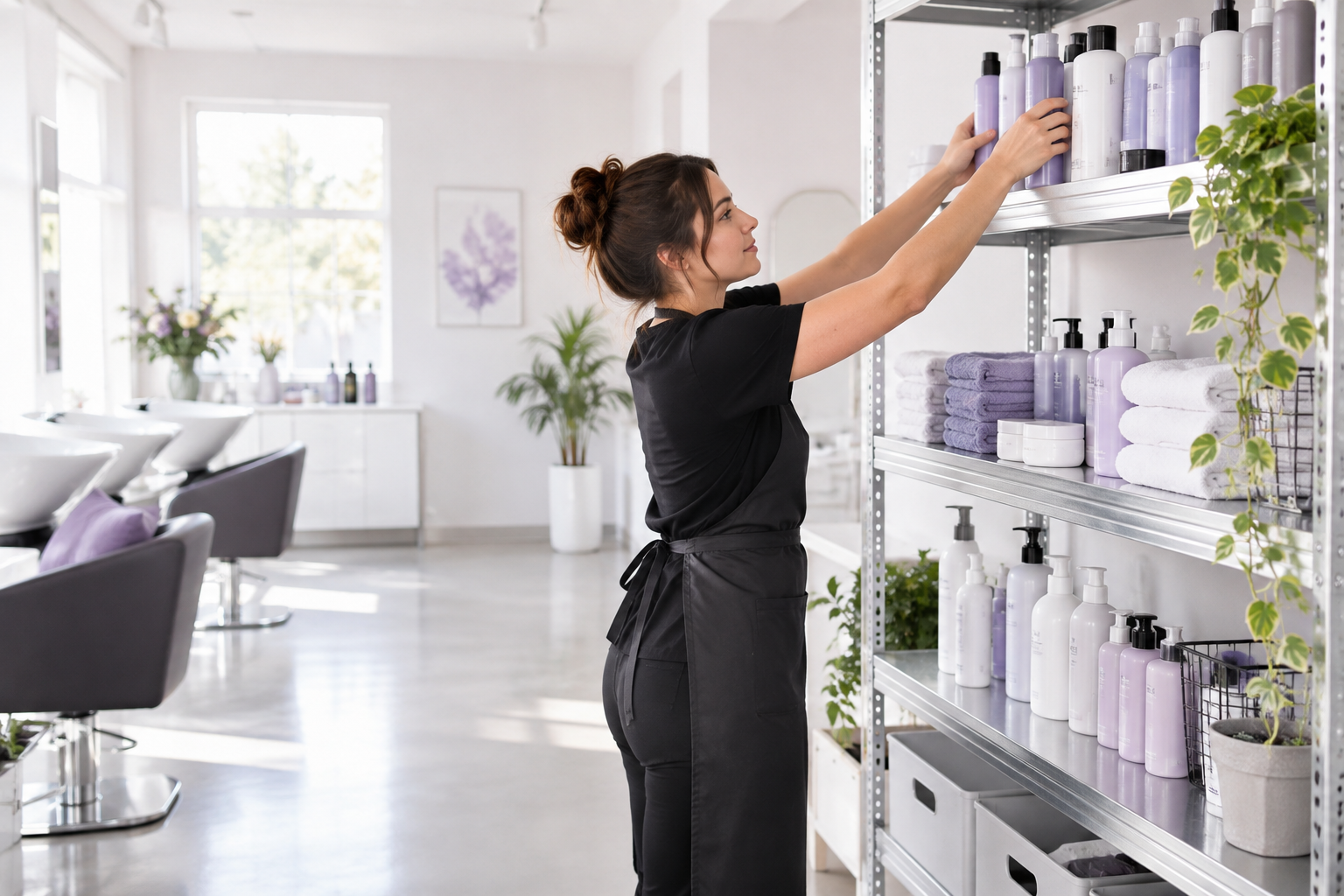
| Storage/Stock | Products on elevated shelves (6 inches) | Chemical barriers and atomization |
| Food Areas | Immediate cleaning of crumbs/sugar | Attractive ant baits |
| Waste | Pedal bins and daily emptying | Sanitization of external containers |
| Structure | Caulking cracks and holes | Installation of rodent capture devices |
When to Hire a Specialized Pest Control Company?
While daily cleaning helps prevent issues, professional pest control (disinfestation and deratization) is often a legal and technical requirement. Attempting to solve infestations with supermarket-grade poisons is dangerous in a service environment for several reasons:
- Risk of Contamination: Improper application can reach brushes, combs, and cosmetics.
- Resistance: Incorrect use of poisons can make pests more resistant over time.
- Chemical Safety: Professional products have specific formulations that ensure efficacy with lower toxicity for humans when applied correctly.
Hiring should be done preventively (usually every 3 to 6 months, depending on the region and traffic) or whenever pests are sighted. It is fundamental that the company is licensed by competent local health authorities.
Documentation and Health Requirements
When hiring a pest control service, the salon owner is not just buying a product application, but also the documentation necessary for business regularization. Maintaining compliance with health standards is essential for legal and operational security.
The documents you should keep in your inspection folder include:
- Certificate of Service: Proving the company is licensed and the service was performed.
- Service Report: Detailing the date, target pests, and products used (including active ingredients and antidotes).
- Reapplication Schedule: Technical recommendation for the interval between treatments.
These documents are vital for obtaining and renewing your business licenses. In many jurisdictions, the certificate must be displayed in a visible location or made immediately available for any local government inspection.
Preparation and Clearing the Environment
The application of chemicals requires planning to avoid interrupting revenue or risking the health of clients and employees. Organizing through an online scheduling system helps block the time for pest control and ensure the necessary safety window before reopening.
Steps for Preparation:
- Protect Tools: Cover electronic equipment (dryers, flat irons) and store instruments like nippers and scissors inside airtight containers or protected drawers. For sterilization tips, see our manicure nipper sterilization guide.
- Cosmetics: Ensure all bottles of shampoo, dyes, and creams are tightly closed.
- Food: Remove any food or kitchen utensils from the area.
- Notify Neighbors: In case of spraying, warn neighboring businesses to avoid discomfort from odors.
After the Service: Re-entry time varies by the product used (gel, powder, or atomized liquid). Generally, the environment must remain closed for 2 to 6 hours. Upon returning, ventilate the space by opening doors and windows. Cleaning direct contact surfaces (counters and chairs) should be done following the pest control company's instructions so as not to remove the residual effect where it is needed.
Managing these time blocks is simple with Orlina. You can use the "Time Blocking" function to ensure no client books during the treatment and ventilation period, avoiding last-minute cancellations that hurt the user experience.
Preventive Checklist for Salons and Barbershops
To facilitate daily operations, we have created a checklist that can be printed and verified weekly by the manager or owner:
- Drains with protective screens installed and clean.
- Trash cans with lids and pedals in all service areas.
- Absence of crumbs or food scraps at the reception and workstations.
- Product stock organized on elevated shelves (at least 6 inches off the floor).
- Clean towels stored in a dry, closed location.
- Cracks in walls, baseboards, or windows properly sealed.
- Pest control certificate within its validity period.
- External area (if applicable) free of debris and tall grass.
- Rubber seals on entry doors intact.
Technology as an Ally in Biosafety Management
Keeping a salon pest-free requires routine and discipline. Often, the owner is so focused on service that they forget to check the validity of the last pest control treatment or schedule grease trap cleaning. This is where automation comes into play.
With Orlina, you centralize your business management. In addition to organizing the client agenda, you can use the system to maintain a database of suppliers, including your pest control company. The use of a daily summary, available in the Pro ($49/month) plan and above, allows you to receive reminders about important maintenance tasks.
Orlina's AI assistant, Gabriel, can help the business owner organize these demands. While Gabriel talks to your customers on WhatsApp in the Pro and Infinity plans to handle bookings and answer questions about services, he is also available on every plan (including the Free plan) to help the professional configure the agenda and manage workflow. If you need to close the salon for pest control next Monday, simply ask Gabriel or use the "Date Exceptions" feature directly in the panel to open or close the agenda on specific dates without touching your weekly fixed hours.
Conclusion: Biosafety is Credibility
Pest control is not just a matter of "not having bugs." It is about public health and professionalism. A client who spots an ant on the workstation or, worse, a cockroach in the bathroom, will rarely return to your establishment. Moreover, social media allows a hygiene problem to be amplified quickly, destroying years of brand building.
Following health regulations and maintaining a rigorous schedule of cleaning and chemical control is what differentiates amateurs from the big names in the beauty market. Biosafety should be viewed as an integral part of the service, just as important as the cut or the color.
Remember: preventive management is cheaper, safer, and less stressful than corrective control. Keep your salon organized, your drains protected, and your schedule under control with the help of digital tools.
Frequently asked questions
How often should I have my beauty salon professionally treated for pests?
The general recommendation is to perform professional pest control every 3 to 6 months. However, the exact interval depends on your local municipal regulations, the history of pests in your specific area, and the volume of people and goods moving through your business. Always follow the technical schedule suggested by a licensed specialist.
Can I use standard supermarket-bought insecticides in my salon?
It is not recommended. Household insecticides can cause pests to develop resistance and, if applied incorrectly in an environment with many chemicals (like hair dyes and straighteners), can cause unwanted reactions or contaminate professional tools. Professional application ensures critical spots are treated safely for humans.
What do health authorities require regarding pest control?
Health departments generally require establishments to maintain an environment free of vectors and urban pests through both preventive and corrective measures. It is mandatory to keep a record of service execution issued by a licensed company, ensure physical barriers like window screens and drain guards are in place, and manage waste properly.
Do I need to close the salon during the pest control application?
In most cases, yes. For liquid applications or atomization, the environment must be evacuated and remain closed for several hours for safety. Gel applications for cockroaches and ants are less invasive, but it is still recommended to perform them outside of business hours. Use Orlina's time blocking feature to organize this break.
Can pests enter the salon through supplier deliveries?
Yes, this is one of the main entry points. Cardboard boxes from external warehouses are common hiding spots for cockroaches and insect eggs. Ideally, you should unpack products as soon as they arrive, discard the outer boxes immediately in an appropriate bin, and inspect the goods before placing them on your stock shelves.