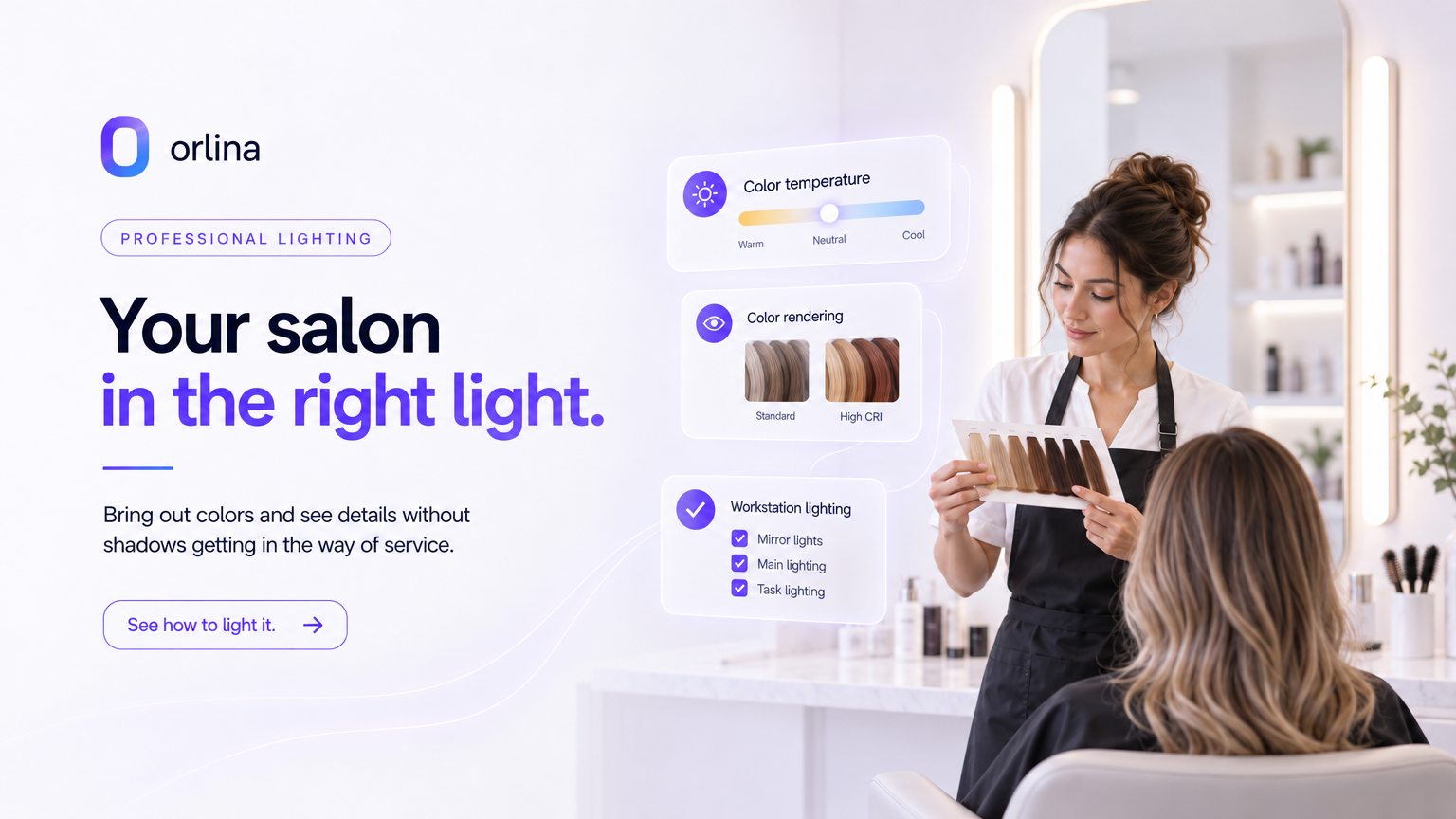
The correct lighting for beauty salons and barbershops combines high color fidelity (CRI above 90) with a neutral color temperature, typically around 4000K. To prevent color distortion in hair dye and makeup, fixtures must be positioned to eliminate facial shadows, preferably using front-facing and side lighting relative to the mirror. According to visual ergonomics standards, high-precision environments require a minimum illuminance of 500 lux to ensure safety and service quality.
The Science of Light in the Beauty Environment
Many professionals believe that simply buying the "strongest" or "brightest" bulbs is enough to achieve a well-lit salon. However, beauty salon lighting is a science involving physics, visual perception, and psychology. The greatest challenge for a hairstylist or barber is not just seeing what they are doing, but seeing exactly what they are doing.
When we discuss "color distortion," we enter the territory of the Color Rendering Index (CRI). If you have ever applied a hair color that looked perfect at your station but turned an unwanted brassy or reddish tone when the client stepped into the sun, the problem wasn't the dye—it was your lighting. Artificial salon light must mimic daylight so that the color spectrum is reflected honestly.
Beyond CRI, color temperature (measured in Kelvin) defines the "soul" of the environment. A light that is too yellow (3000K) can camouflage unwanted warm tones in blonde hair, while a light that is too blue (6000K) can make the client's skin look pale or sickly, negatively affecting their emotional experience in the mirror. For those working in aesthetics and visagism, balance is the key to success and avoiding rework.
Color Rendering Index (CRI): The Invisible Hero
CRI is a scale from 0 to 100 that indicates how faithfully a light source reveals colors. For the general public, bulbs with a CRI of 80 are acceptable. For you, the beauty professional, they are insufficient. In a salon, the ideal is to work with a CRI above 90.
Why does this matter? Imagine makeup application. A foundation that appears to blend perfectly with the skin under low-CRI light might reveal blotches or the wrong undertone as soon as the client steps outside. This happens because low-quality light lacks the full chromatic spectrum components needed to reflect the real color of pigments.
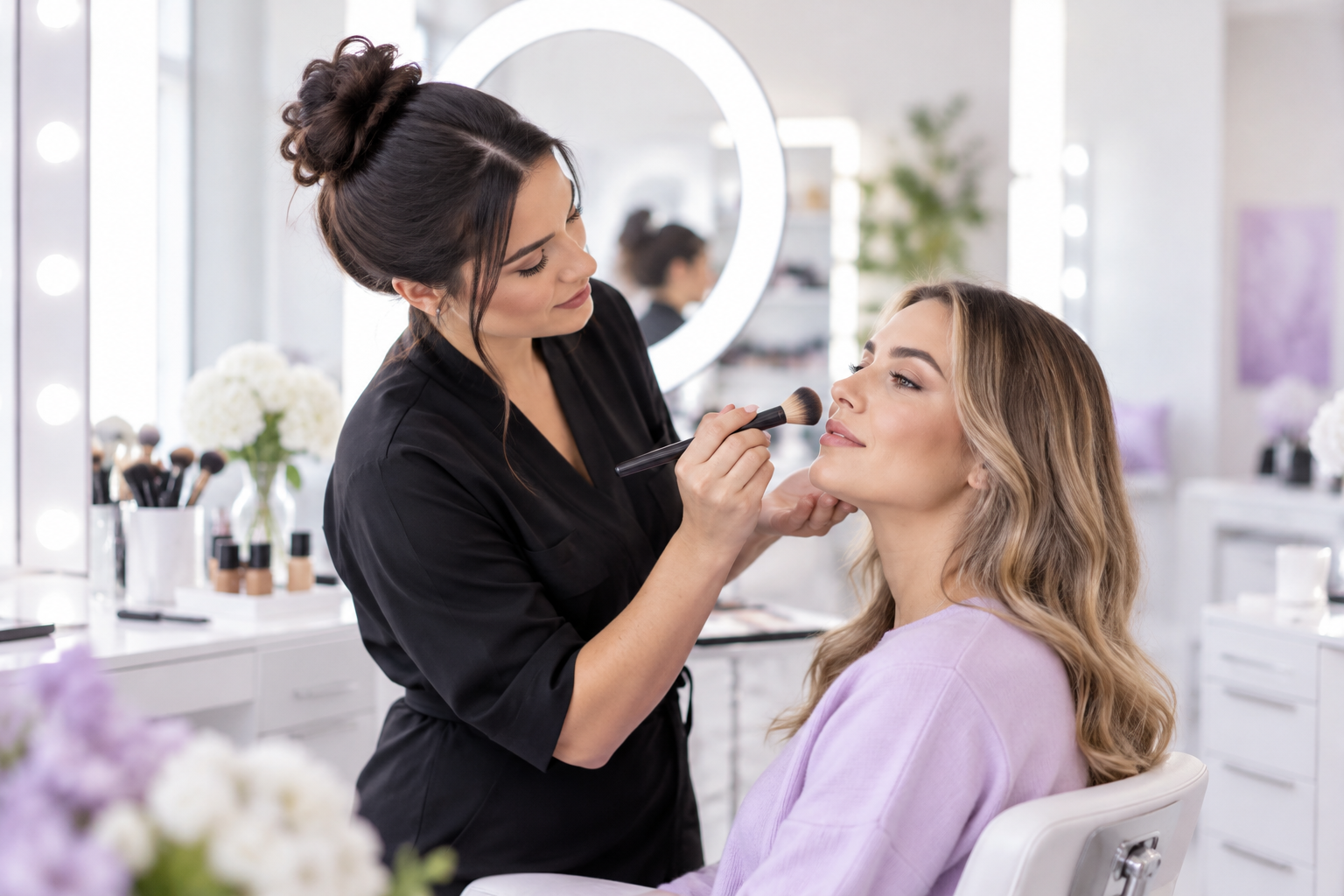
In barbershops, a high CRI helps identify hair density and the precision of a fade. Different skin tones react differently to light; without faithful reproduction, a barber might "over-work" areas that only appear lighter due to a lighting flaw. By investing in professional-grade lighting, you are essentially buying insurance against technical errors.
Color Temperature: Neutral, Warm, or Cool?
Color temperature has nothing to do with the physical heat of the bulb, but rather the tone of the light emitted. In many regions, there is a cultural tendency to prefer very white, cool lights (6000K to 6500K) under the false impression that they "illuminate more." However, for beauty, this is the worst possible choice.
Cool light flattens volumes and alters skin tone perception, often leaving them looking grayish. On the other hand, warm light (below 3000K) is relaxing and cozy, making it ideal for the hair washing station but terrible for the cutting station, as it turns everything "orangey."
The "sweet spot" for the workspace is neutral light (4000K to 4500K). It is bright enough to keep the professional alert and focused but does not distort pigments. It allows you to see the underlying hair pigment during bleaching with surgical precision. If your salon is small, using a single temperature might be tempting, but creating different temperature zones is what separates amateurs from elite professionals.
How to Light Mirrors Without Creating Shadows
The most common mistake in salons and barbershops is placing a recessed spotlight or a LED downlight directly over the client's head. The result? Deep shadows in the eyes, under the nose, and at the chin. This not only makes makeup and beard work difficult but also makes the client feel "unattractive" when looking in the mirror.
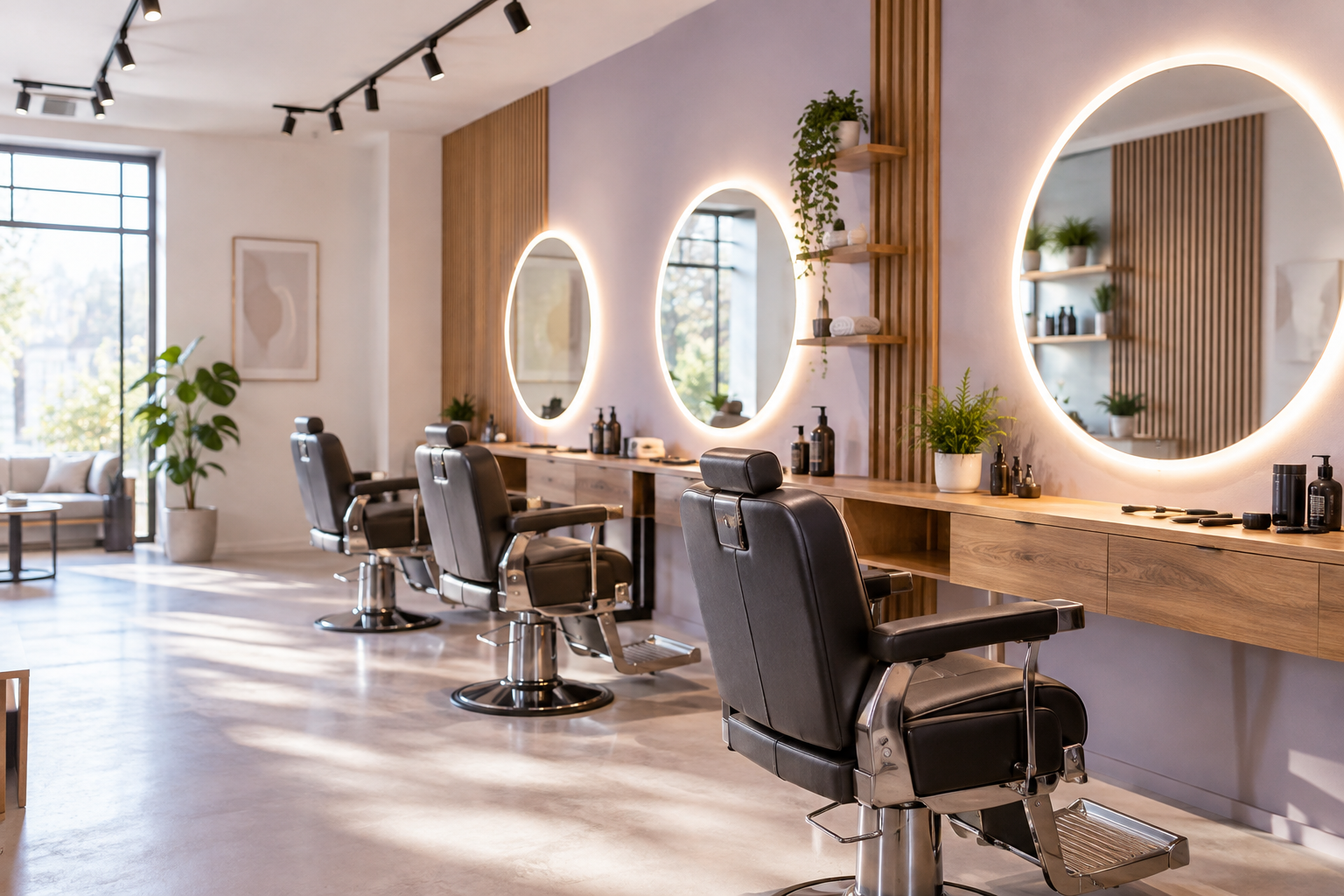
The solution is frontal or lateral lighting. Light should meet the client's face, filling in the shadows created by ceiling lights. Mirrors with integrated LED strips (modern vanity style) or side sconces at face height are the best options.
For barbershops seeking an industrial style, pendant lights can be used, provided they stay out of the professional's line of sight and do not generate direct reflections in the mirror that dazzle the client. The goal is to create a soft, uniform "cloud of light" around the chair.
Zonal Lighting: Reception, Washing Station, and Workstation
Each area of your business requires a different type of light because the activities performed change. Let's analyze the logic of each space:
1. Reception and Retail Area
Here, the goal is welcoming the client and highlighting products. Use a warmer light (3000K) to create comfort. If you have a shelf for retail products, use directed spots with very high CRI so that the packaging looks vibrant and attractive. High-quality accent lighting can significantly increase the perceived value of products.
2. Washing Station (Shampoo Bowl)
The washing station is a moment of relaxation. The client is lying down, looking at the ceiling. Nothing is worse than a bright light shining directly into their eyes. Here, lighting should be indirect (bounced off the ceiling or walls) and warm. This helps lower cortisol levels and prepares the client for the service to follow.
3. Workstation
This is your "operating room." It requires the highest level of lux (intensity) and color precision. Here we combine general light (from the ceiling) with task lighting (from the mirror). The mix should result in an environment with no blind spots.
| Area | Suggested Temperature | Objective | Fixture Type |
|---|---|---|---|
| Reception | 2700K - 3000K | Welcoming | Decorative Pendants |
| Workstation | 4000K - 4500K | Color Precision | Frontal LED + Panels |
| Washing Station | 2700K - 3000K | Relaxation | Indirect Light / Cove |
| Bar/Coffee Area | 2400K - 3000K | Style / Comfort | Carbon Filament Bulbs |
Challenges of Small Spaces and Rented Properties
Many professionals start in rented rooms where they cannot cut into the drywall or perform major electrical renovations. If this is your case, do not be discouraged. There are "plug and play" solutions that transform the environment.
For those who cannot change the ceiling, track lighting is the best way out. You install only one power point and can distribute several spots along the track, directing the light exactly where you need it. Another option is mirrors with integrated lighting that plug directly into the wall outlet.
In small spaces, an excess of mirrors can cause a "light bounce" problem, generating infinite reflections that tire the eyes. In these cases, use matte colors on the walls and avoid fixtures with exposed bulbs; always prefer those with diffusers (frosted covers) that soften the light beam.
Visual Ergonomics and Fatigue Prevention
Working 8 or 10 hours a day under inadequate lighting causes extreme tiredness, headaches, and, in the long term, vision problems. Glare is one of the main villains. It occurs when light hits a shiny surface (like a mirror or stainless steel scissors) and reflects directly onto your retina.
To avoid this, the position of the fixtures must be calculated in relation to the position in which you work. The light should never be behind you, as you will cast a shadow over the client's head. It should be slightly in front or to the sides.
Furthermore, uniformity is essential. If your salon has very bright areas and very dark areas, your pupil must dilate and contract constantly as you move. This constant effort is what generates the sensation of "eye strain" at the end of the day. Maintaining an efficient environment also involves taking care of your physical health. To better organize your time and avoid burnout, consider using an online scheduling system that allows for strategic breaks between appointments.
Checklist: Evaluate Your Salon Before Buying Bulbs
Before going to the hardware store, take this checklist with you:
- What is the bulb's CRI? If it is not printed on the box, be wary. Look for values >90.
- What is the color temperature? Aim for 4000K for work and 3000K for rest areas.
- Is there frontal light on the mirror? If not, how can I add it (sconces, LED strips)?
- Does the light reflect in the mirror and glare at the professional? Test different angles.
- Is the ceiling a light color? White ceilings help bounce light and save on the number of bulbs needed.
- Do the fixtures have a diffuser? Avoid exposed "dotted" LEDs, which create multiple shadows.
When to Hire a Lighting Design Professional?
If your space is large, has very high ceilings, or if you are investing in luxury positioning, hiring a lighting designer is not an expense—it is an investment. A professional lighting project considers the "maintenance factor" (how much light loses strength over time) and the exact calculation of lumens per square foot.
Often, a poorly executed project consumes more energy and delivers less light than a well-planned one. Furthermore, lighting is a fundamental part of your sensory marketing. A well-lit environment is "Instagrammable," encouraging clients to take photos and tag your profile on social media.
Technology in Favor of Environment Management
Taking care of lighting is only one part of the customer experience. For all the visual effort not to be lost in a messy reception or delays, technology must be your ally. While you focus on the precision of a cut under perfect light, Gabriel, Orlina's AI assistant, can take care of your appointments via WhatsApp.
Gabriel is not a rigid bot with numbered menus. He understands natural language. If a client asks, "Do you have any openings for highlights on Saturday?", he checks your availability and responds as naturally as you would. For those looking for an efficient business, counting on automatic reminders sent by AI is a huge competitive advantage.
Maintenance: Bulbs Also Age
LEDs have a long lifespan, but they don't "burn out" all at once like old incandescent bulbs. They suffer from luminous depreciation. Over the months, the light output decreases, and the color may begin to shift (becoming slightly greenish or pinkish).
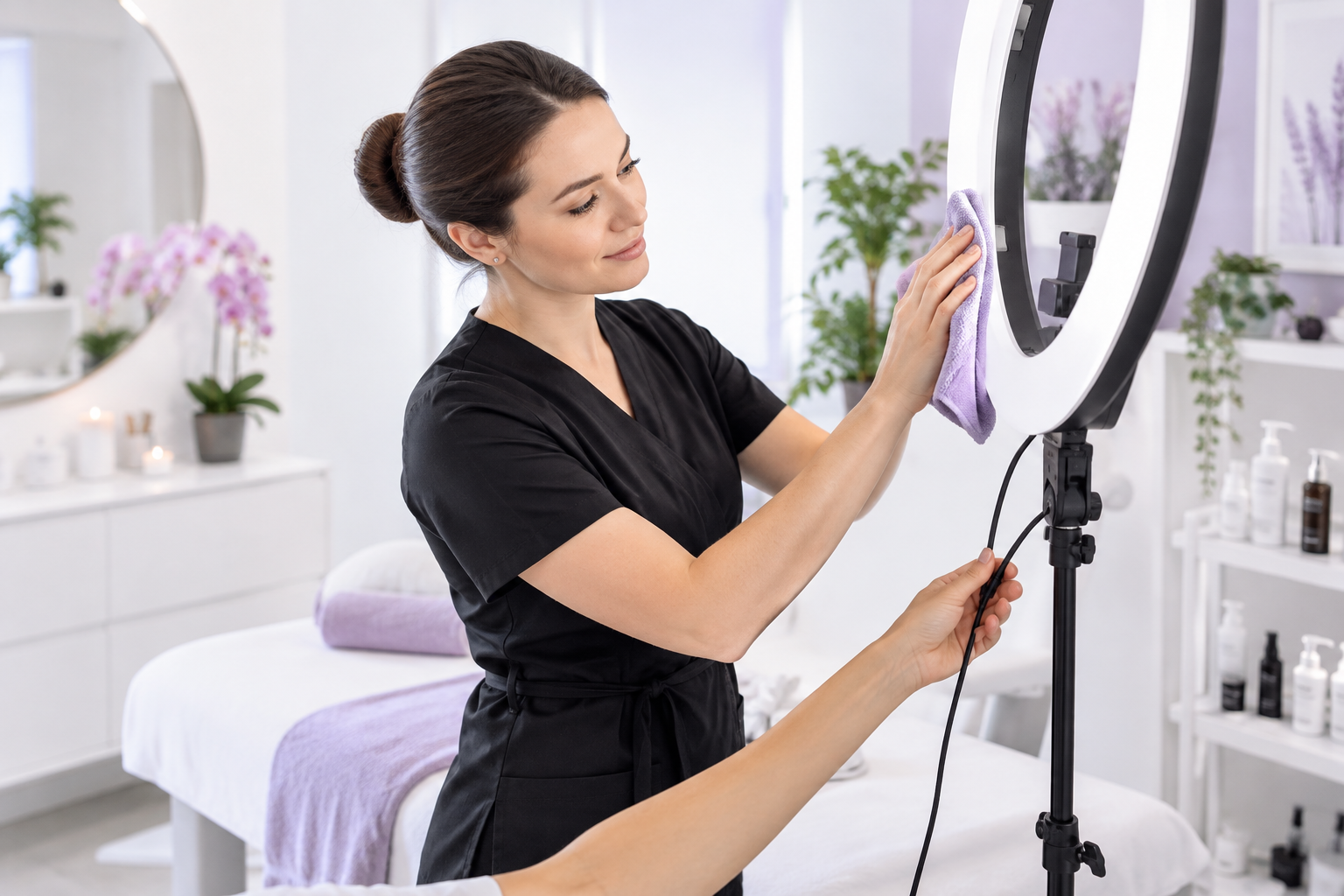
Develop the habit of cleaning your light fixtures. Dust accumulated on diffusers can reduce lighting efficiency by up to 30%. Additionally, check the preventive maintenance of other equipment to ensure your salon runs like a well-oiled machine. Maintaining hygiene is also vital; for instance, following a towels sanitization guide ensures the visual cleanliness matches the professional lighting.
Lighting and Makeup: The Challenge of Real Skin
For makeup artists, lighting is the most important brush. The light must be diffused to hide overly prominent pores and allow for a smooth transition of shadows. The "cross lighting" technique (light coming from two opposite sides at 45 degrees) is the most recommended for eliminating any unwanted shadows on the client's face.
Avoid mixing bulbs of different brands in the same mirror, as each manufacturer has a slight variation in tone, which can confuse your color perception during foundation or blush application. If your salon serves brides, having an area with light that simulates both indoor (event/party) and outdoor (outdoor photos) environments is a high-value service.
Conclusion: Light as a Brand Differentiator
Good lighting is not a luxury; it is a basic tool for anyone dealing with colors and shapes. By investing in a neutral color temperature, high CRI, and strategic positioning, you reduce technical errors, increase customer satisfaction, and protect your own visual health.
A well-lit salon communicates professionalism before you even open your mouth. It enhances the environment, highlights your products, and ensures that the blonde hair you spent hours perfecting is appreciated in all its glory. Combine this technical excellence with modern, automated management, and your business will be ready to scale. If you are still using a paper diary, it might be time to upgrade to a system that matches the quality you deliver.
Frequently asked questions
What is the best bulb for colorimetry in a salon?
The best bulbs are LEDs with a CRI (Color Rendering Index) higher than 90 and a neutral color temperature between 4000K and 4500K. These ensure that the color you see at the station is the same one the client will see in natural daylight, preventing distortions in blonde and redhead tones.
Why does ceiling lighting create shadows on the client's face?
This happens because the light comes from a zenithal angle (top-down), causing facial features like the forehead and nose to cast shadows in cavities such as the eyes and chin. To solve this, you must add frontal lighting at eye level.
Can I use regular LED strips on my mirrors?
You can, provided the LED strip has a high density of diodes (to avoid the "dotted" reflection effect) and a high CRI. Many cheap LED strips have a low CRI, which will distort the colors of makeup and hair.
Is cool white light (6500K) bad for barbershops?
While many barbers use it thinking it "brightens more," excessive cool light tires the eyes and makes the client's skin look pale and unnatural. The ideal for modern barbershops is neutral light (4000K), which maintains precision without sacrificing aesthetic comfort.
How can I light a beauty salon on a budget?
The most economical and efficient solution is to install electrified tracks with adjustable LED spots. This allows you to utilize existing ceiling power points and move the lighting to where it is needed without requiring complex drywall renovations.