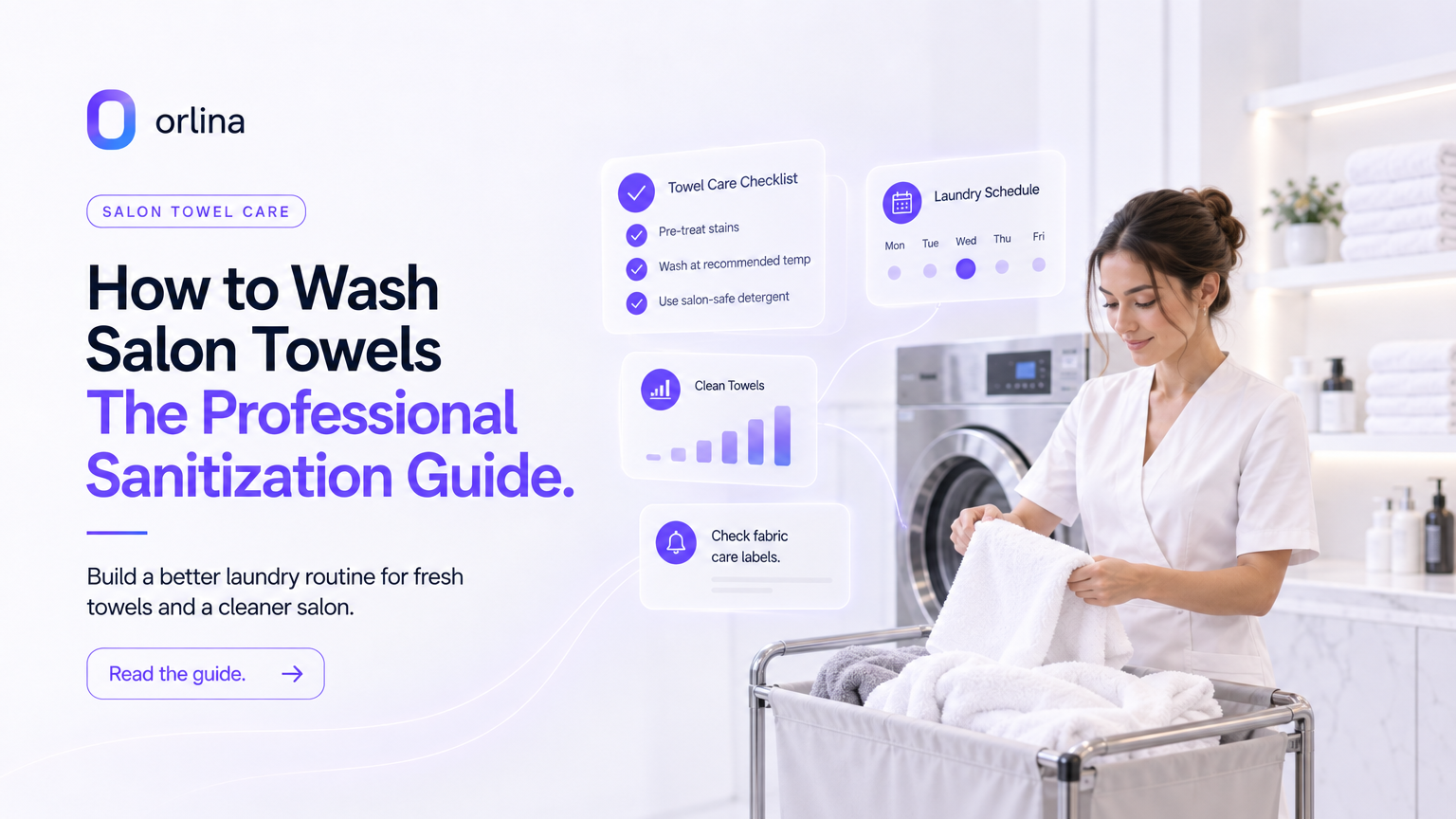
How to wash salon towels is a question that sits at the intersection of customer comfort and strict biosafety compliance. To properly sanitize salon linens, you must follow a rigorous protocol of thermal or chemical disinfection, strict separation of clean and dirty items, and complete drying to prevent the growth of fungi and bacteria. According to industry hygiene standards, professional-grade detergents and high-heat drying are essential to ensure both the longevity of your linens and protection against cross-contamination.
Managing a beauty salon, barbershop, or aesthetics clinic involves much more than manual technique or customer service. There is an invisible gear that sustains the operation: hygiene. Among all common-use items, towels are perhaps the most critical. They come into direct contact with the client's face, neck, and scalp—sensitive areas that can be gateways for microorganisms. If you seek professionalism, understanding how to wash salon towels is not just an expanded household chore, but an essential industrial and sanitary process.
In this comprehensive guide, we will explore everything from product chemistry to storage logistics, helping you decide between in-house laundry and outsourcing, while providing a practical daily checklist for your business.
The Importance of Proper Sanitization for Biosafety
Biosafety in beauty establishments is not limited to manicure nipper sterilization. Towels are potential vehicles for the transmission of skin diseases, such as ringworm, folliculitis, and even more serious bacterial infections. When a towel is used to dry hair after a wash or to protect the neck during a cut, it absorbs moisture, dead cells, cosmetic residues, and sweat.
If this towel is not sanitized correctly, it becomes a perfect environment for fungal cultures. Residual moisture, combined with the heat of the salon environment, accelerates the decomposition of organic residues, generating 그 "sour towel" smell that drives any client away. More than the odor, the sanitary risk is real. Health authorities worldwide mandate that all textile articles in beauty services must be changed for every client and undergo a cleaning and disinfection process before reuse.
Therefore, washing salon towels is not just about "removing the dye stain." It is about ensuring the fabric is microscopically safe. This requires a combination of mechanical action (washing), chemical action (detergents and disinfectants), and, preferably, thermal action (hot water or high-temperature drying).
Separation and Towel Flow: Where It All Begins
The most common mistake in many salons begins right after the towel is used. Mixing dirty towels with clean ones, or leaving them piled in a damp corner for hours, is the first step toward disaster.
The Golden Rule: Immediate Separation
As soon as the service ends, the towel must be removed from the workstation. Never, under any circumstances, should a towel be "shaken" in the environment to remove hair, as this disperses particles into the air. It should be folded with the used part facing inward and placed in a basket exclusive for dirty items.
Proper Containers
Baskets for dirty towels should be:
- Waterproof: To prevent moisture from wet towels from seeping into the floor or walls.
- Lidded: To prevent the dispersal of odors and protect the contents from insects.
- Washable: They must be washed and disinfected weekly.
Classification by Residue
In large salons, it is recommended to separate towels by type of soil:
- Shampoo Station Towels: Contain only shampoo, conditioner, and water residues.
- Chemical Towels: Stained with hair color, bleach, or chemical straighteners. These require pre-treatment so the chemicals do not damage other pieces.
- Aesthetic/Face Towels: Require deeper disinfection due to contact with mucous membranes and fluids.
![A professional laundry area in a beauty salon with organized baskets for dirty towels and a modern industrial washing machine]
How to Wash Salon Towels: A Technical Step-by-Step
The actual washing requires technique to remove difficult stains, such as massage oils and color pigments, without destroying the cotton fibers.
1. Pre-washing and Stain Removal
If the towel has excess hair dye or chemicals, a quick rinse or pre-wash with cold water helps loosen the pigments before they set with heat. For oil stains (common in aesthetic clinics), using a specific degreasing detergent for fabrics is fundamental.
2. Choosing the Right Chemicals
Avoid miracle home recipes. Baking soda and vinegar have their uses, but in a professional environment, you need chemical stability.
- Neutral or Alkaline Detergents: Remove organic dirt.
- Bleaches (Chlorine or Oxygen-based): Chlorine is excellent for white towels but wears down the fiber quickly. Hydrogen peroxide (oxygen bleach) is gentler and can be used on colored towels for disinfection.
- Textile Disinfectants: There are specific products for hospital and hotel laundries that can be adapted for salons, ensuring the elimination of 99.9% of germs.
3. Water Temperature
Whenever possible, wash towels with water between 104°F and 140°F (40°C to 60°C). The temperature helps dissolve fats and enhances the action of detergents, in addition to assisting in the elimination of mites and fungi. If your machine only works with cold water, the compensation must come from the chemical load (more disinfectant).
4. The Danger of Excess Fabric Softener
Many salon owners overdo the fabric softener seeking that "clean" smell. However, fabric softener creates a hydrophobic film (which repels water) on the towel fibers. Over time, the towel stops absorbing water. Use as little as possible or replace it with a textile acidifier, which neutralizes the pH of the detergent and leaves the towel soft without sealing the fibers.
Drying and Eliminating Odors
Drying is the stage where most bad smell problems occur. A towel that takes 24 hours to dry on a line is a towel that has already begun to create bacterial colonies before it even reaches the cabinet.
Dryers vs. Line Drying
For a beauty salon, a dryer is almost a mandatory item for two reasons:
- Thermal Sterilization: The high heat of the dryer completes the disinfection process.
- Softness: The mechanical movement of the dryer "lifts" the towel fibers, leaving them fluffy. Line drying tends to leave towels stiff.
If you use a clothesline, make sure it is in a ventilated area with direct sunlight. Never fold or store a towel that is even slightly damp. The center of the towel must be perfectly dry, or the "wet dog smell" will appear as soon as the client touches their face to it.
Protected Storage and Organization
After drying, towels should be folded immediately to preserve softness. Storage should be done in a closed, clean place, away from the area where sprays, powders, and other volatile salon products are applied.
- Closed Cabinets: Protect against dust and hair particles flying through the salon.
- Labeled Shelves: Separate towels by function (face, body, chemical).
- Inventory Rotation: Use the FIFO (First In, First Out) technique. Freshly washed towels should go to the bottom of the stack, ensuring all pieces are used and washed with the same frequency, increasing the overall lifespan of the linens.
![A clean, white wooden cabinet filled with perfectly folded turquoise towels in a bright, modern barbershop]
Linen Management: In-House vs. Outsourced Laundry?
This is a dilemma for many entrepreneurs. The answer depends on your volume of appointments and your management capacity. According to small business management standards, optimizing operational costs necessarily involves analyzing the maintenance of consumable materials.
| Criterion | In-House Laundry | Outsourced Laundry |
|---|---|---|
| Initial Cost | High (Purchase of machines) | Zero |
| Operational Cost | Water, energy, products, and labor | Fixed value per pound or piece |
| Quality Control | Total and immediate | Depends on the supplier |
| Physical Space | Requires ventilated technical area | Frees up space in the salon |
| Risks | Machine maintenance and stock breaks | Delivery delays |
| Biosafety | Under your direct responsibility | Must demand sanitary reports |
If your salon handles more than 20 appointments per day that involve towels, in-house laundry usually pays for itself in the medium term. For solo professionals or smaller studios, outsourcing or using domestic machines with sanitization cycles may be the initial path. Regardless of the choice, time management is vital. If you lose 2 hours of your day washing towels, it might be time to automate other processes, like scheduling, to focus on management.
To organize your routine and not get lost between hygiene tasks and service, having a robust online scheduling system helps predict the volume of towels needed for the next day based on the number of services booked.
Technology as an Ally in Salon Organization
Maintaining the flow of clean towels requires predictability. If you know that tomorrow you have 15 color services and 10 cuts, you know exactly how many towels of each type need to be ready in the cabinet. This is where digital management meets operational management.
With Orlina, you can view your schedule clearly, allowing for better planning of staff and supplies. The use of Gabriel, Orlina's AI assistant (available on the Pro plan at $49/month and above), helps reduce no-shows and last-minute cancellations. This means less waste of prepared materials and a more stable cash flow to invest in improvements, like a more efficient dryer or higher quality towels.
Furthermore, understanding the health of your business through financial indicators helps decide if laundry costs are within the expected margin. Keeping track of cosmetic expiration and salon stock is another critical part of this professional hygiene flow.
Sanitization Routine Checklist
To facilitate staff training or organize your own routine, use this daily checklist:
- Opening: Check if there are enough clean, dry towels for all the day's appointments (check the morning briefing from Gabriel if you are on the Pro plan).
- During the Day: Deposit used towels immediately in the closed basket. Never reuse the same towel on different clients, not even to "wipe the counter."
- Processing: Start the first wash load as soon as the basket reaches 80% of the machine's capacity (do not overload the machine as it compromises the wash).
- Inspection: When taking items out of the dryer, check for persistent stains. Stained or torn towels should be discarded or used for heavy floor cleaning, never returning to the client.
- Closing: Ensure no towel stays damp inside the machine or basket overnight.
Special Care for Black and Colored Towels
Barbershops often use black or dark towels to hide stains from pigmentation and beard products. However, the fact that a stain does not show doesn't mean the dirt isn't there.
- Fading: Wash dark towels separately from light ones and use products that protect color. Excessive fading conveys an image of neglect.
- Hot Towel Therapy: If you provide hot towel service, hygiene must be tripled. The heat and prolonged moisture of the towel on the client's face require it to have been washed with high-level disinfectants. It is recommended to use specific hot towel warmers that maintain temperature without soaking the fabric, but the towel must enter the warmer already clean and dry.
![A barber placing a rolled white towel into a specialized towel warmer, focus on the clean professional environment]
When to Discard a Towel?
Linens are consumable items with a defined lifespan. No matter how good the washing is, cotton undergoes natural wear and tear. Signs that it’s time to buy new towels include:
- Frayed edges: They give a "worn-out" feeling.
- Excessive roughness: Even with correct product use, fibers break and become uncomfortable.
- Permanent stains: If a dye stain hasn't come out after three heavy-duty wash attempts, the towel should no longer go to the client.
- Persistent odor: If, after washing and complete drying, the towel still has a residual smell when moistened, there is a bacterial biofilm that is difficult to remove without damaging the fabric.
Maintaining impeccable linens is one of the cheapest and most effective forms of sensory marketing. The touch of a soft towel and the gentle smell of cleanliness are powerful triggers for customer loyalty.
Conclusion
Mastering the technique of how to wash salon towels is a fundamental pillar of managing any aesthetics or barbering business. It is not just about aesthetics, but about public health and respect for the client. By investing in clear processes, proper products, and good drying logistics, you protect your business from sanitary issues and raise the level of your service delivery.
Remember: attention to detail reflects the care you have for your craft. And so that you have time to take care of these details, let technology handle the bureaucracy. If you still waste time confirming appointments manually, discover how Gabriel can transform your routine, allowing you to focus on what really matters: the customer experience.
Frequently Asked Questions
Can I use the same towel on two clients if it doesn't look dirty?
No. According to hygiene standards and biosafety protocols, any textile article that comes into contact with a client must be replaced after each use, regardless of visible dirt or moisture. Reuse poses a high risk of cross-contamination and infection.
Does using vinegar replace disinfectant in towel washing?
No, it does not. While vinegar helps neutralize pH and can slightly soften fibers, it does not have proven germicidal power to eliminate pathogenic microorganisms in a professional environment. You must use textile disinfectants registered for commercial or hospital use.
How do I get rid of the "sour" or damp towel smell?
The smell is caused by bacteria. To remove it, perform a wash with hot water (140°F/60°C) and an oxygen-based bleach booster (peroxide). Drying must be immediate and total in an industrial dryer or on a line with strong sun and plenty of ventilation.
What is the best towel color for a beauty salon?
White towels are highly recommended for hygiene, as they allow for the use of chlorine bleach and make it easy to see any dirt. However, for chemical processes like hair coloring, black or dark-colored towels are more practical to hide permanent pigment stains.
How many towels should I have in my inventory?
The recommended calculation is at least 3 to 4 towels per planned daily appointment. This allows one batch to be in use, one batch in the laundry, and one batch ready in stock for emergencies or unexpected high demand. Respecting this rotation increases the durability of your linens.