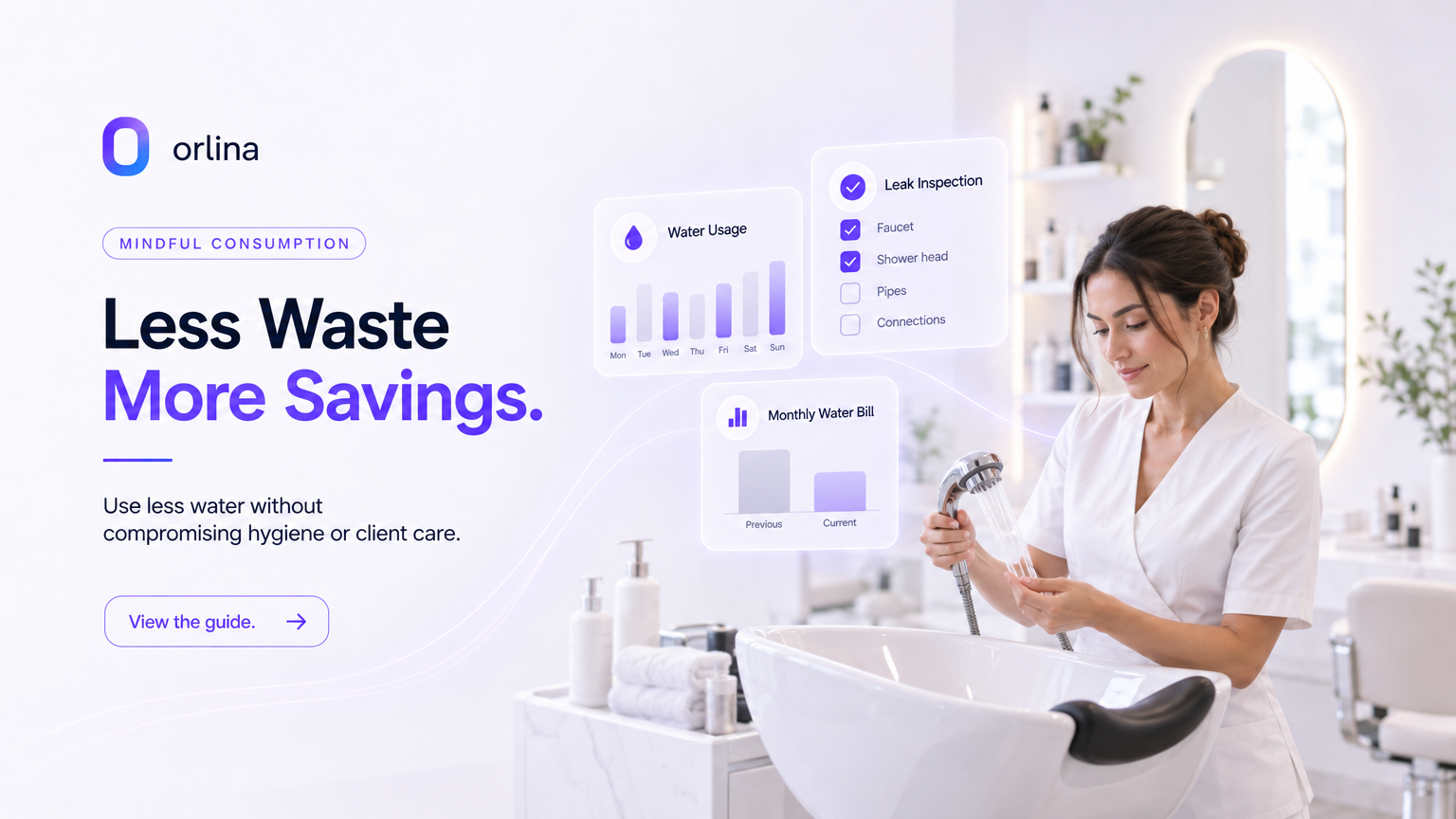
To save water in a beauty salon without compromising hygiene, professionals must focus on retrofitting shampoo bowls with controlled-flow aerators and conducting rigorous maintenance to catch imperceptible leaks. Water efficiency is achieved by monitoring consumption per service and adopting equipment that ensures adequate pressure with a lower volume of water. According to industry environmental standards, conscious resource management is a fundamental pillar for the sustainability and profitability of small beauty businesses.
The Importance of Water Management in the Salon Industry
Water is arguably the most critical input for any aesthetic establishment, barbershop, or beauty salon. From rinsing out hair color to sanitizing towels and cleaning the environment, the flow of water is constant. However, many entrepreneurs treat the water bill as an unavoidable fixed cost, when it is actually a variable that can be drastically optimized through management and technology.
Saving water is not just about "spending less"; it is about applying process engineering so that every gallon used fulfills its function with maximum efficacy. In a scenario where operational costs tend to rise, water efficiency becomes a competitive differentiator. Furthermore, environmental consciousness is a value increasingly appreciated by modern clients, who prefer to patronize businesses that demonstrate responsibility toward the planet.
In this guide, we will explore how you can transform your consumption reality—from identifying invisible leaks to the technical selection of shampoo bowl equipment—ensuring that the quality of your service remains impeccable while your overhead drops.
How to Identify Leaks and Invisible Waste
The first step to reducing your water bill is not buying new equipment, but ensuring that the water you already pay for isn't going down the drain unused. Imperceptible leaks are the biggest villains of your budget. A simple drip from a faucet can waste more than 10 gallons of water per day.
The Meter Test
To find out if your salon has a hidden leak, perform a water meter test. Choose a period when the salon will be closed (such as a Sunday night or Monday). Note the numbers recorded on the meter. Ensure all faucets are closed and that no one is using toilets or washing machines. After 12 hours, check the number again. If there is any change, you have a leak that requires immediate repair.
Toilet Leaks
Another critical point is the flush valves or toilet tanks. To test this, you can drop a bit of food coloring or coffee grounds into the tank and do not flush. If the color appears in the bowl after a few minutes, the seal is compromised. This is a common problem that, because it is silent, often goes unnoticed for months.
Shampoo Bowl Connections
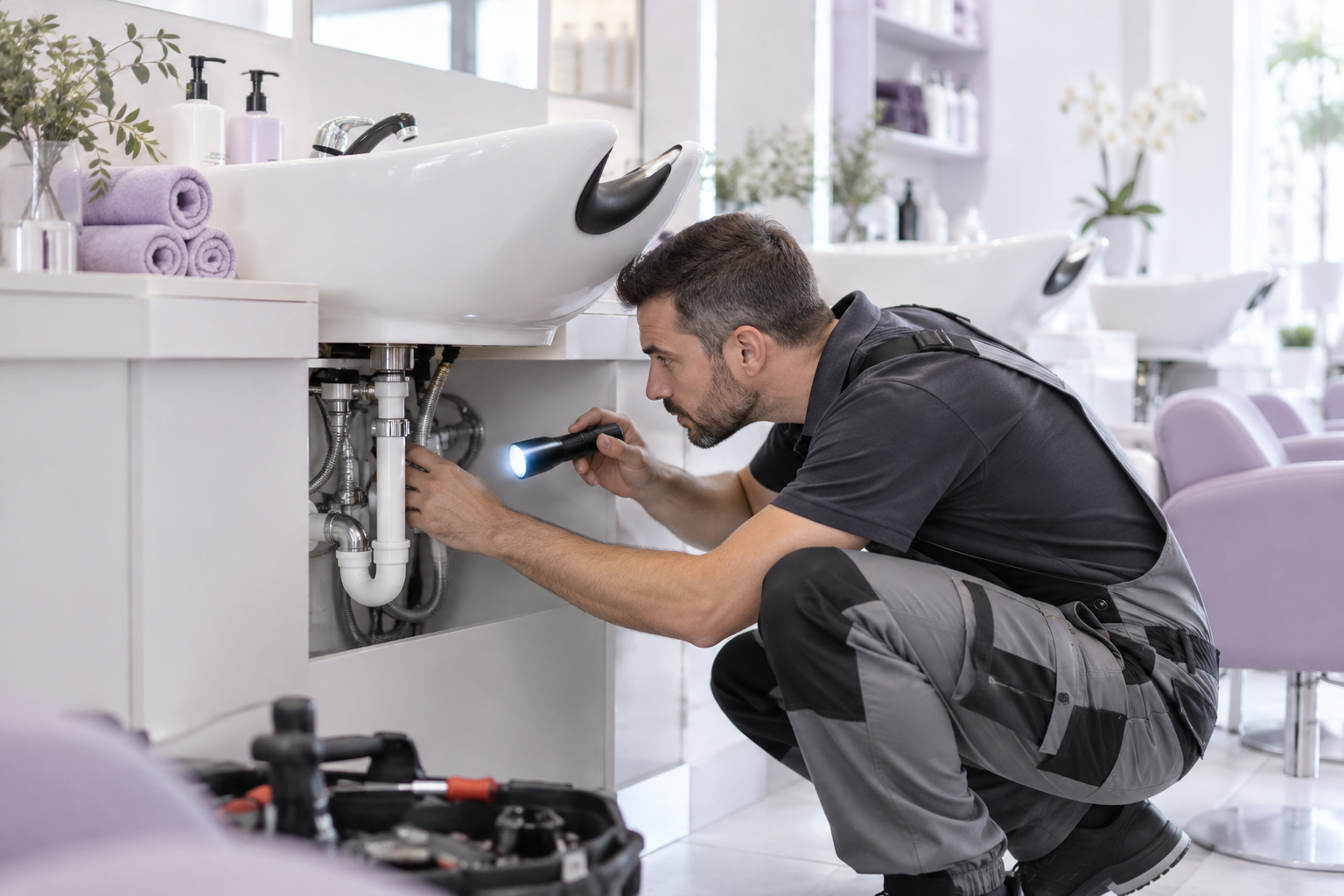
Salon shampoo bowls suffer significant mechanical stress. The constant movement of the hose and the spray head can loosen internal connections. Periodically open the cabinet or check the underside of the bowl for moisture or mold—clear signs of a water leak.
Consumption Monitoring: The "Water Per Service" Method
To manage, you must measure. Simply looking at the total bill amount doesn't help you understand where the problem lies. The most effective method for salons is calculating the Average Consumption per Service (ACS).
- Record the number of services: During one month, track every service that used water (hair washing, manicures, pedicures, etc.).
- Check the volume on the bill: Look at how many gallons (or cubic units) were consumed in the month.
- Divide volume by services: If you consumed 4,000 gallons and performed 200 hair washes, your ACS is 20 gallons per service.
By tracking this indicator month by month, you can see if changes in staff behavior or the installation of new equipment are actually having an effect. If the number of services drops but water consumption rises, there is a new leak or operational waste occurring.
Water-Saving Equipment: Aerators and Flow Restrictors
Technology is your greatest ally in saving water. Often, waste occurs because the faucet flow is higher than necessary for an efficient rinse.
Faucet Aerators
An aerator is a small piece that fits onto the tip of the faucet or spray head. Its function is to mix air into the water. This creates a voluminous, foamy jet that gives the sensation of higher pressure and volume, but it actually uses up to 50% less water. For the salon, the aerator is excellent because it facilitates the removal of shampoos and conditioners without needing to open the faucet to its maximum.
Flow Restrictors
Unlike the aerator, a restrictor is a ring that limits the maximum amount of water that can pass through the pipe, regardless of the network pressure. If the water pressure in your area is very high, the faucet ends up expelling more water than the scalp can absorb, causing splashing and waste. The restrictor stabilizes this flow.
Equipment Comparison Table
| Equipment | Primary Function | Impact on Client Experience | Installation Difficulty |
|---|---|---|---|
| Aerator | Mixes air with water | Improves volume perception | Very Low (screw-on) |
| Flow Restrictor | Limits maximum output | Maintains constant jet | Low (internal) |
| High-Pressure Head | Smaller, precise holes | Scalp massage effect | Medium (replacement) |
| Foot Pedal Valve | Foot-operated flow | Superior hygiene (hands-free) | High (plumbing work) |
Optimizing the Shampoo Bowl: The Heart of Consumption
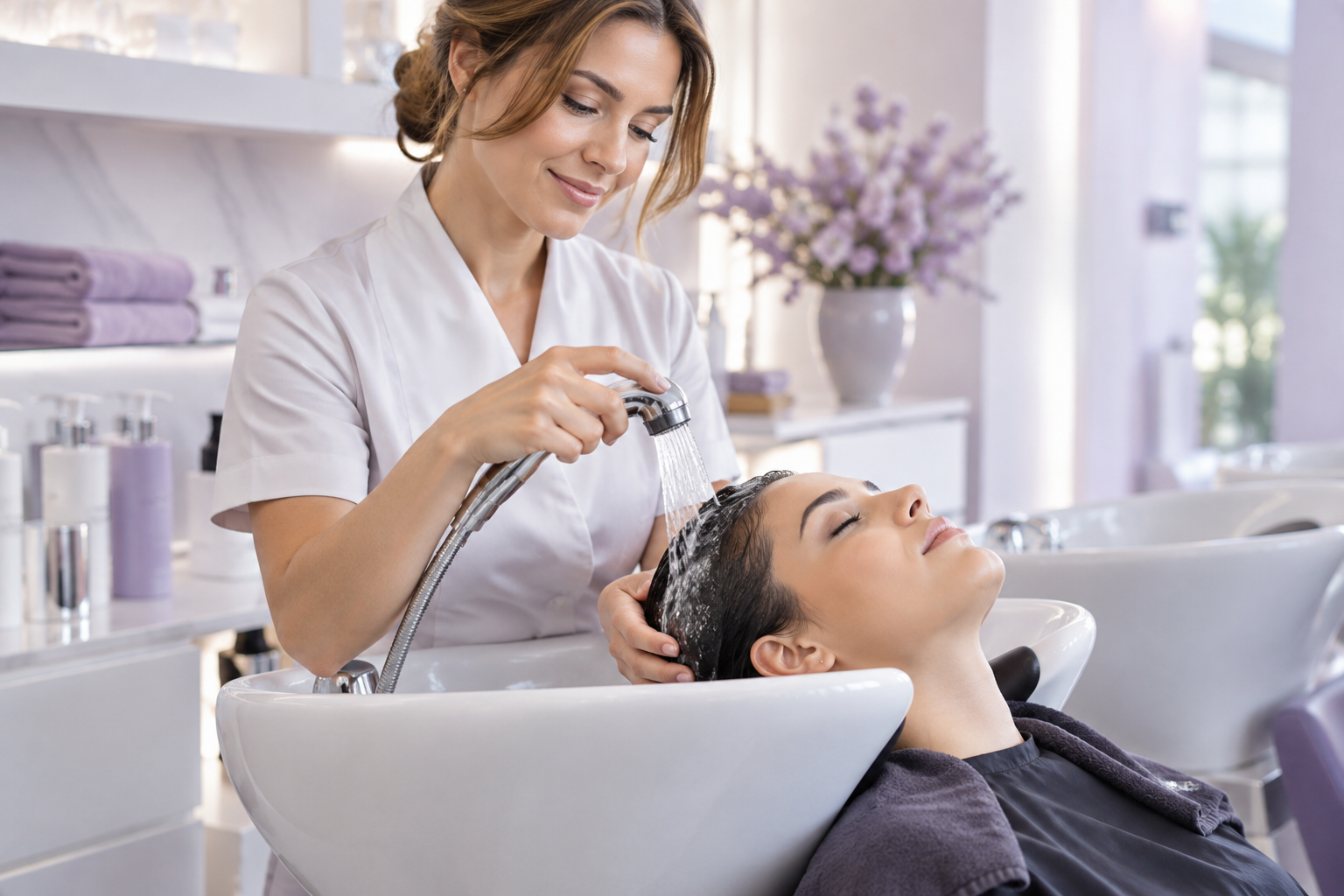
The shampoo bowl is where the majority of potable water consumption occurs in a salon. The professional’s technique directly influences savings.
- Wetting vs. Rinsing: To wet the hair before shampooing, maximum flow is not necessary. A medium flow is sufficient to saturate the strands.
- Closing during massage: A common mistake is leaving the water running while applying shampoo or performing a scalp massage. The water should only be open when it is effectively in contact with the hair to remove product.
- Water Temperature: Excessively hot water takes longer to adjust and often requires the professional to leave the faucet open while waiting for it to "heat up." Investing in efficient tankless water heaters helps provide hot water instantly.
When considering modernization, check equipment compatibility. Some water-saving spray heads work via pressure; if the salon's water tank is too low, the jet may become too weak, hindering the rinsing of heavy chemicals like lighteners. In this case, a booster pump might be necessary.
Sanitization and Cleaning: Reducing Waste in the Environment
Salon cleaning follows strict health and safety standards. However, cleaning well does not mean wasting large amounts of water.
- Broom before the hose: Never use a water jet to "sweep" hair or dirt off the floor. Use a broom or vacuum first. Water should only be used for the final disinfection with a mop or damp cloth.
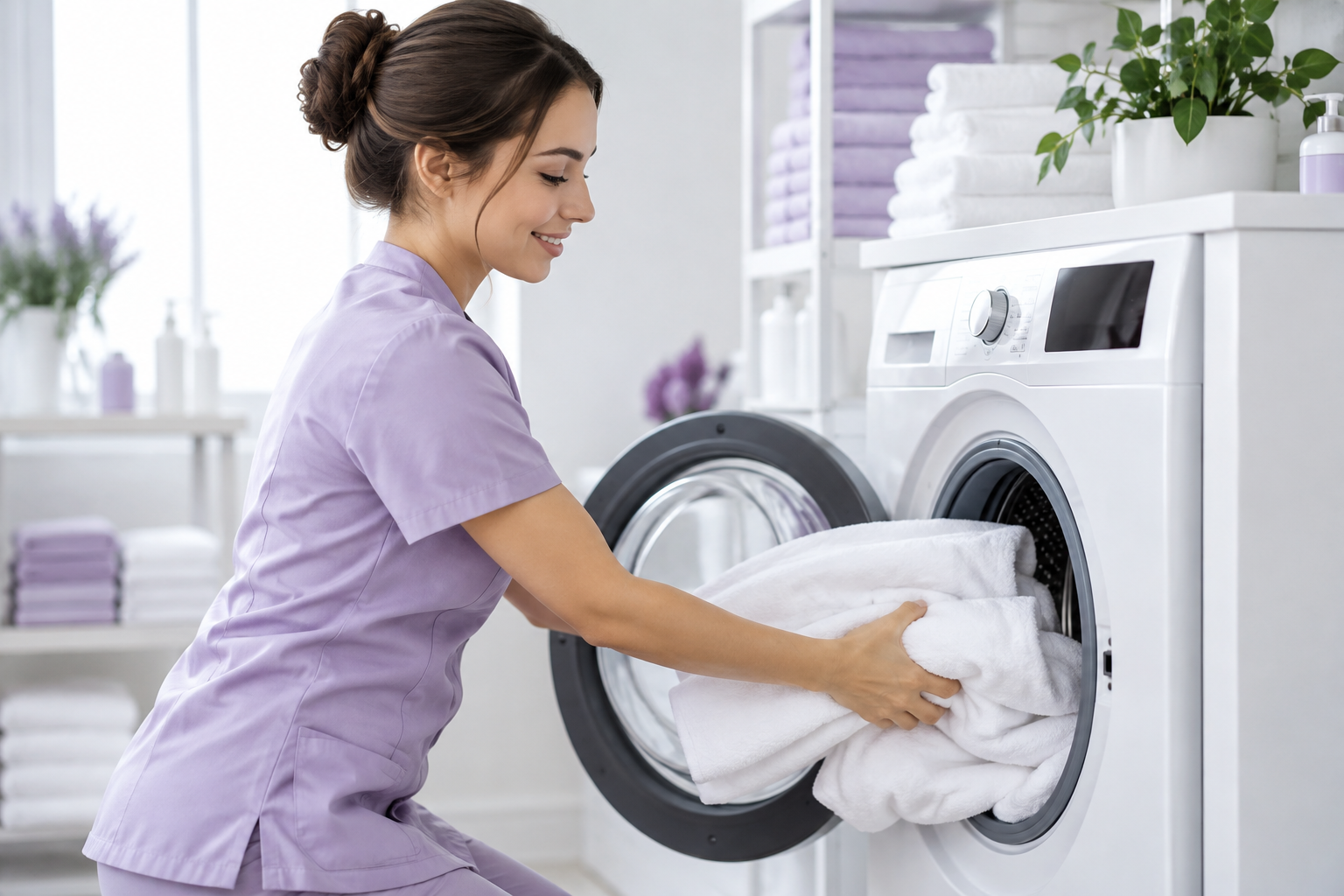
- Washing Towels: This is another critical point. Wait for a full load before starting the washing machine. For more details on optimizing this, check our salon towel washing guide. Using high-quality disposable towels on peak days can also be an alternative to reduce the demand on internal laundry.
Management and Automation as Sustainability Tools
You might be wondering: what does appointment scheduling have to do with saving water? The answer is: predictability.
A disorganized salon, where clients arrive at random times or where there are many delays, generates spikes in water use followed by periods of idleness. When you use an efficient online scheduling system, you can better distribute appointments throughout the day, preventing equipment from running constantly during peak "chaos" periods.
Additionally, the financial organization allowed by tools like Orlina helps identify budget surpluses that can be reinvested in infrastructure, such as replacing old toilets with dual-flush models (1.6 and 0.8 gallons). Cost control is the foundation for any savings initiative.
If you manage a team, using an agenda for multiple professionals allows you to monitor the time taken for each service. Excessively long washes may indicate the need for staff training on conscious water use.
Monthly Water Inspection Checklist
To ensure that waste does not return, implement this inspection routine:
- Water Meter: Perform the total shut-off test for 12 hours.
- Faucets and Sprayers: Check for drips after closing and ensure aerators are clean (mineral buildup can reduce efficiency).
- Toilets: Test the seal with coloring agents.
- Shampoo Hoses: Inspect for cracks or leaks in flexible joints.
- Filters: If your salon uses water filters for the bowl, check that they are not clogged, which forces the pump and increases rinsing time.
- Water Bill: Compare consumption in gallons with the previous month and the same month last year (seasonality).
Gabriel AI Technology in Management Support
While Gabriel, Orlina's AI assistant, doesn't fix leaks, he is fundamental to the financial health that allows for these improvements. In the Pro plan ($49/month), Gabriel handles all customer communication via WhatsApp, from booking to reactivation.
When Gabriel automates customer service, the salon owner gains time to focus on operational management, such as performing the water inspection checklist mentioned above. Less time spent manually texting clients means more time maintaining the efficiency of your local business.
Conclusion
Saving water in a beauty salon is an exercise in observation and continuous improvement. By identifying leaks, installing saving equipment like aerators, and monitoring consumption per service, you not only reduce costs but also position your brand as a conscious and modern business.
Remember that savings should never compromise hygiene. Potable water is essential for biological safety in beauty procedures. The focus should always be the elimination of waste: water that runs without a purpose is profit that washes away.
Integrating this awareness with digital management is the fastest way to transform a small salon into a solid, profitable, and sustainable company.
Frequently asked questions
Can the use of aerators hinder the removal of dye or chemicals from hair?
No, provided the correct model is chosen. Modern aerators maintain the necessary pressure for rinsing by mixing air to increase the jet's volume. In fact, they can even help spread water better between hair strands, facilitating the removal of color residues more quickly.
How do I know if the water pressure is sufficient to install a flow restrictor?
If water from your faucet comes out with significant force and splashes outside the shampoo bowl, the pressure is likely high enough for a restrictor. If the flow is already weak or oscillating, a restrictor could make the service too slow. In those cases, stick to just an aerator.
Is it allowed to reuse washing machine water to clean the salon floor?
According to health standards, cleaning critical areas must be done with clean water and appropriate disinfectants. However, water from the final rinse of the washing machine (which contains less soap) can be used to wash sidewalks or external areas, as long as it does not pose a contamination risk to service areas.
What is the average water consumption considered "normal" per hair wash?
Although it varies by hair length, it is estimated that an efficient wash consumes between 4 to 8 gallons of water. Values much higher than this, such as 15 gallons per service, indicate that the faucet is being kept open unnecessarily or that the equipment flow is unregulated.
Is it worth investing in disposable towels to save water?
It depends on your laundry costs versus the cost of the disposable towel. You must consider water, electricity, cleaning products, and staff time. For many salons, disposable towels are advantageous in terms of hygiene and water savings, but you must evaluate the environmental impact of the waste generated. We recommend reviewing local regulations on waste disposal before making the switch.