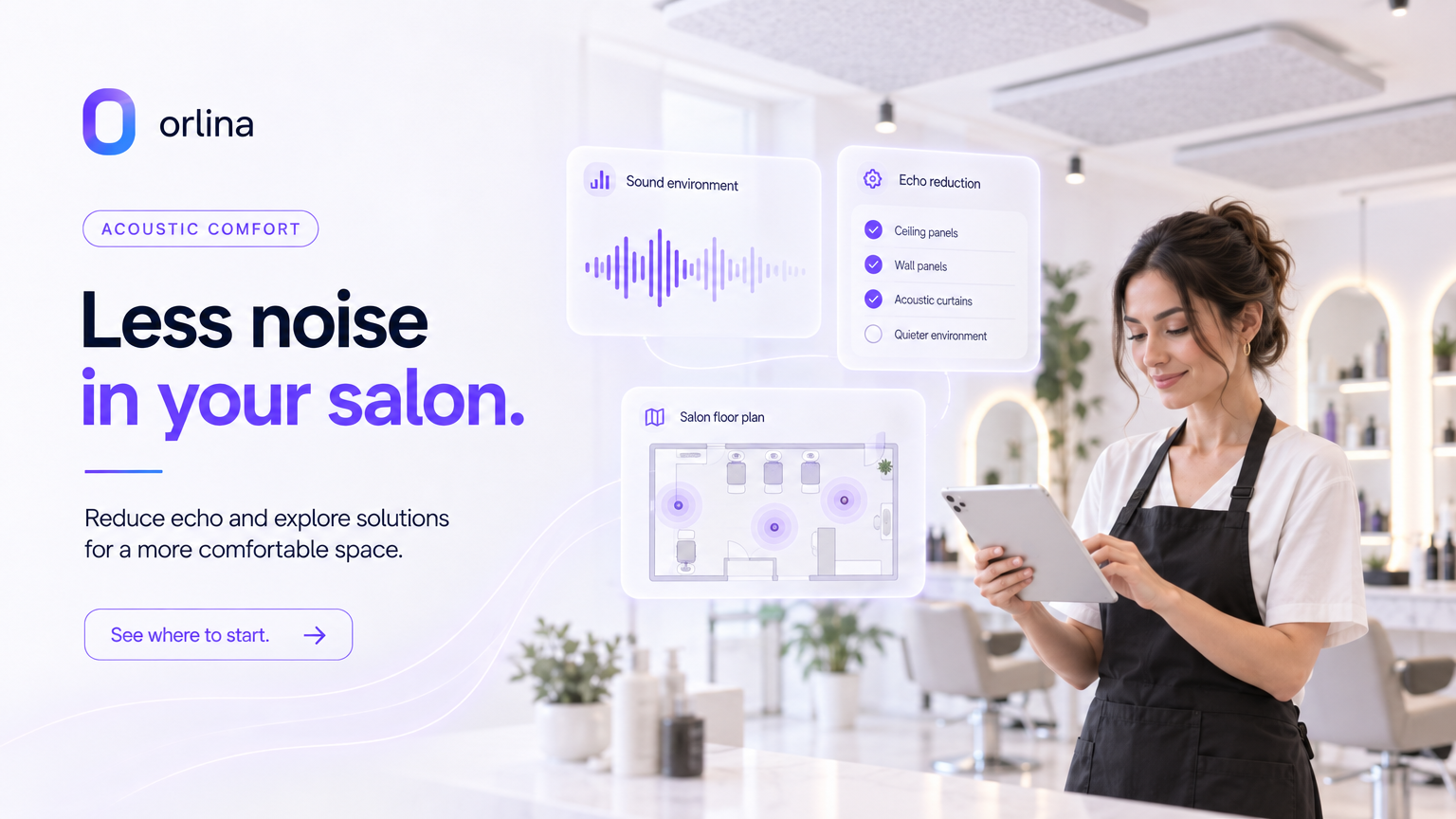
Acoustic comfort in beauty salons and barbershops is achieved by balancing sound isolation—which prevents sound from escaping or entering—and acoustic treatment, which absorbs internal echoes. Practical solutions such as sealing door gaps, using rubber mats under blow dryers, and reorganizing the layout can reduce perceived noise by up to 50% without structural renovations. According to international occupational health standards, service environments should maintain sound comfort levels to preserve the hearing health of professionals and the overall customer experience.
Why Acoustics is the "Invisible Service" of Your Salon
When we think about the customer experience in a beauty salon or barbershop, sight and touch are usually the first senses that come to mind. Impeccable decor, a comfortable chair, and high-quality coffee are basic pillars. However, hearing plays an understated but critical role in customer retention and staff health. Excessive noise—stemming from high-power blow dryers, hair clippers, cross-talk, background music, and street traffic—creates an environment of sonic stress.
Excessive noise is not just an annoyance; it is a revenue drain. A client who cannot relax during a hair wash or who has to shout to be heard by the professional is unlikely to perceive "luxury" or "care," regardless of the price charged for the service. Furthermore, prolonged exposure to noise above 85 decibels (dB), common in salons with multiple dryers running simultaneously, can cause mental fatigue and, in the long term, hearing loss for employees.
Therefore, investing in acoustics does not just mean putting foam on the wall; it is about managing sound energy so the environment is welcoming. In this complete guide, we will explore how you can transform the sound of your space without needing a complete overhaul, prioritizing intelligent, economical solutions compatible with health and safety regulations.
Soundproofing vs. Acoustic Treatment: What is Your Problem?
Before buying any material, it is essential to understand the technical difference between the two main concepts of acoustics. Often, a salon owner spends a fortune on absorbent foams to try to stop complaints from the neighbor upstairs, when in reality, the solution should be different.
Soundproofing (Shielding)
Soundproofing aims to prevent sound from leaving or entering the environment. If neighbors complain about the sound of your music or if traffic noise interrupts the calm of your aesthetics room, you have an isolation problem. Isolation requires mass and airtightness. Sound is like water: if there is a gap, it passes through. Dense materials like masonry, drywall with rock wool, double glazing, and solid doors are the protagonists here.
Acoustic Treatment (Internal Comfort)
Treatment aims to improve the quality of sound inside the salon. You know that "echo" (reverberation) that makes three people talking sound like a crowd? That is a lack of treatment. The goal here is to absorb sound waves so they don't bounce off walls, ceilings, and mirrors (which are highly reflective surfaces). This is where acoustic clouds, rugs, heavy curtains, and porous materials come in.
Below, we have prepared a comparative table to help with your investment decision:
| Feature | Soundproofing (Isolation) | Acoustic Treatment |
|---|---|---|
| Primary Goal | Block sound passage (in/out) | Reduce echo and internal noise (comfort) |
| Common Materials | Double walls, solid doors, seals | Foam panels, clouds, fabrics, rugs |
| Main Beneficiary | Neighbors and clients (vs. external noise) | Professionals and clients (internal mood) |
| Complexity | Generally requires small renovations | Can be done with decorative items |
| Action Focus | Gaps, windows, and wall density | Ceilings, smooth walls, and hard surfaces |
Strategic Reorganization: The Zero-Cost Fix
The first and most effective way to reduce noise without spending a dime is layout analysis. Sound behaves in predictable ways. If you place all the blow dryers facing a mirrored wall, the noise will be amplified.
Distribution of Noise Sources
If your salon has a wash area and a cutting area, try to create visual and physical barriers (such as product shelves) between them. This helps break the direct path of the sound wave. Also, avoid placing vibrating machines, such as compressors or old air conditioners, directly against walls that face quiet service rooms (like massage or waxing). Vibration turns into structural noise that travels through the wall.
The Power of Furniture
MDF wood furniture, upholstered armchairs, and even product displays act as "diffusers." They break up sound waves. Instead of having a totally "clean" salon with smooth white walls, using shelves with retail products can help disperse sound, reducing the sensation of echo.
When planning the arrangement of professionals, consider workflow and time management. A visually less chaotic environment tends to be perceived as less noisy, as the client's mental organization influences their sensory perception.
Sealing Gaps: Where Sound "Leaks"
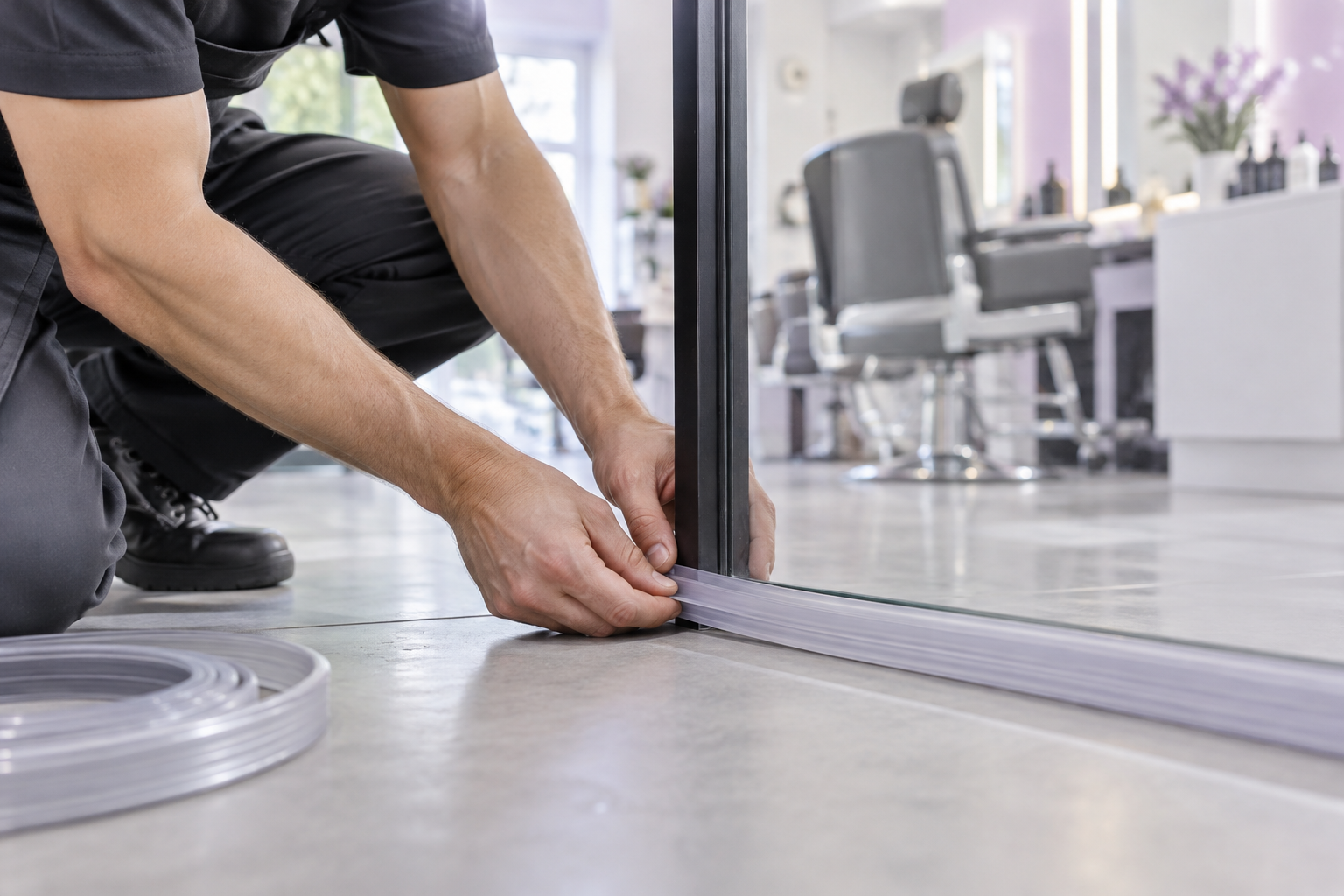
As mentioned, sound behaves like a fluid. If air passes, sound passes. Tempered glass doors, very common in modern barbershops, usually have generous gaps at the sides and the floor.
- Rubber or Brush Door Seals: Installing a sealing "sweep" at the base of doors can drastically reduce the entry of street noise and the exit of dryer noise into the building hallway.
- Window Sealing: If your salon is on a busy avenue, check if the windows close hermetically. The use of EPDM (rubber) sealing tapes on the frames is a cheap and extremely effective solution.
- Outlet Boxes and AC Holes: Often sound passes through electrical conduits or poorly sealed holes for air conditioning pipes. Using expanding foam or caulking in these small openings makes a notable difference in isolation.
Treating Reflective Surfaces
Beauty salons are, by nature, full of hard surfaces: mirrors, porcelain tiles, glass, and marble or granite countertops. These surfaces are "enemies" of good acoustics because they reflect almost 100% of the sound that hits them.
The Ceiling: Your Biggest Opportunity
Since the floor needs to be easy to clean for biosafety reasons (as guided by sanitary safety protocols), you cannot simply cover it with carpet. Therefore, the ceiling becomes the most important area for acoustic treatment.
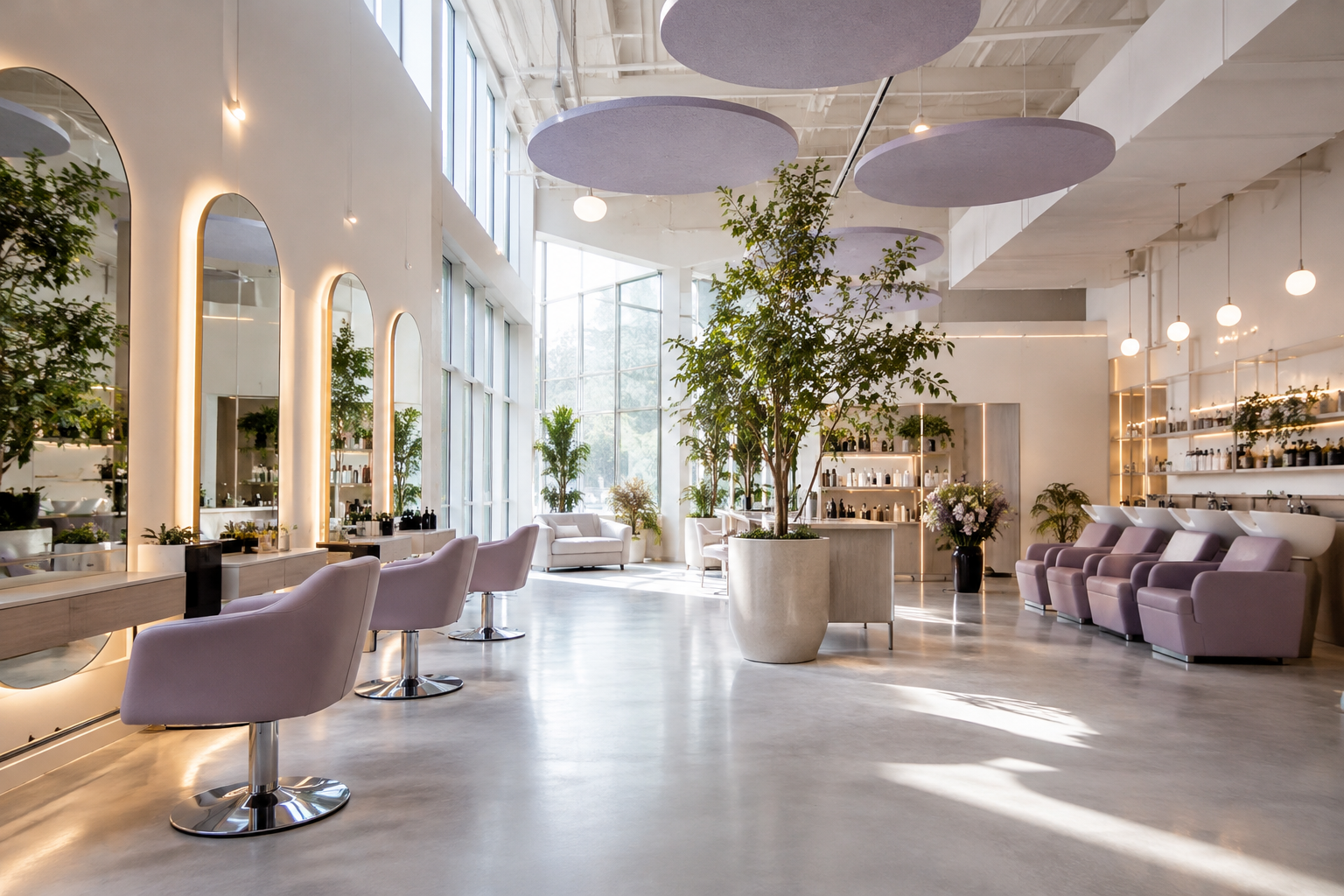
- Acoustic Clouds: These are suspended panels, usually made of rock wool or recycled PET, covered with fabric. They look elegant and absorb sound traveling upward, preventing it from bouncing back down.
- Cellulose Spray: An option for those with exposed industrial ceilings. It is a layer of fibrous material applied by spray that absorbs sound and also helps with thermal insulation.
Walls and Functional Decoration
If you don't want to use traditional acoustic foams (which can look unattractive), opt for slatted wood panels with an acoustic blanket backing. This is a strong design trend that combines aesthetics and functionality. Additionally, canvas paintings with internal foam padding can act as sound absorbers disguised as art.
For professionals looking to maintain total organization while managing the environment, using an online scheduling system helps avoid unnecessary crowding, which naturally reduces the level of cross-talk and the total noise of the space.
Dealing with Equipment Noise
Hair dryers are the main sources of noise in a salon. Some models reach 90 dB. Multiply this by five professionals working at the same time, and you will have an unhealthy environment.
- Investment in "Silent" Equipment: When renewing your stock, prioritize dryers with digital motors or noise reduction technologies. They are more expensive, but the acoustic comfort pays off.
- Preventive Maintenance: Worn bearings in dryers or clippers make much more noise. Keep preventive equipment maintenance up to date to ensure they operate smoothly.
- Rubberized Countertops: Placing a running dryer on a stone countertop generates impact noise. Using silicone or rubber mats on the counters cushions this sound and protects your appliances.
The Importance of Ventilation and Climate Control
A common mistake when trying to isolate sound is sealing the environment so much that air renewal is compromised. In beauty salons, where chemicals are used (such as in straightening and coloring), ventilation is mandatory.
According to the ventilation and air quality guide, you must ensure that exhaust ducts do not become giant "headphones" that carry salon noise directly to other floors. The use of noise attenuators in the ducts or choosing exhaust fans with low sound emission levels (measured in Sones or dB) is essential.
Regulations and Standards
Every entrepreneur must be aware of local noise ordinances. In the United States, for example, the Occupational Safety and Health Administration (OSHA) sets limits on noise exposure in the workplace to prevent hearing loss. According to OSHA standards, the permissible exposure limit is 90 decibels (dBA) for an 8-hour workday.
- Residential Zones: Often lower limits, especially during evening hours.
- Commercial Zones: Generally allow higher decibel levels during business hours but may still be subject to nuisance complaints.
If your salon operates late or plays loud music, you could be targeted for inspection. Non-compliance can lead to heavy fines. It is recommended to consult local government websites for specific zoning laws in your city.
When to Hire a Professional?
While the tips above help mitigate 60% to 70% of common problems, there are situations that require an acoustic engineer:
- Recurring Neighbor Complaints: If structural isolation has failed, only a professional will know where the acoustic bridges are.
- Luxury Salons in Residential Buildings: The demand for silence is very high.
- Very Large Spaces: Where the reverberation calculation needs to be exact so as not to "muffle" the sound too much (which is also uncomfortable).
A professional acoustic report also serves as a legal defense if you receive unfounded complaints. It is an investment in legal security for your business.
The Psychology of Sound and Customer Experience
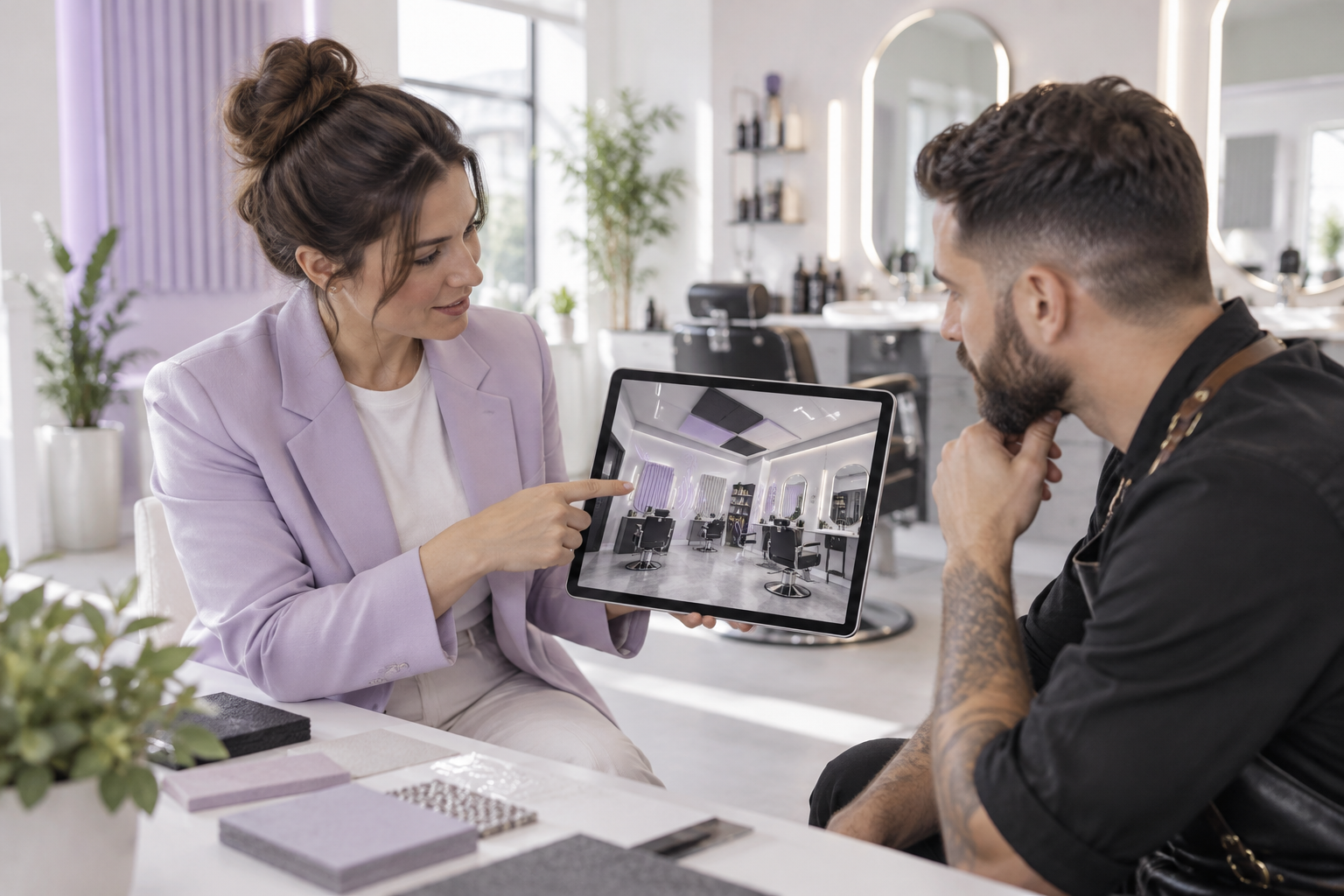
In addition to reducing bad noise, you should introduce "good sound." Sound masking is a technique where soft background noise (like relaxing ambient music or nature sounds) is used to cover others' conversations. This ensures privacy.
A client getting a shave or a hair treatment doesn't want to hear the gossip from the next chair or the financial details of the salon. Good acoustic treatment, combined with the intelligent use of Gabriel—who manages confirmations silently and automatically via WhatsApp—removes the need for the reception to be constantly making calls, contributing to the sonic peace of the environment.
Acoustics Checklist for Salons and Barbershops
To facilitate your journey, we created this practical checklist. Start with low-cost actions and progress as needed:
- Identification: Is the problem sound leaving (neighbors) or internal echo (comfort)?
- Layout: Have I moved dryers away from sound-reflecting walls? Have I placed physical barriers (shelves)?
- Sealing: Are all doors and windows well-sealed with rubber?
- Cushioning: Do countertops have silicone mats for equipment?
- Ceiling: Can I install acoustic clouds or absorbent panels?
- Maintenance: Are the dryers clean and the bearings in good condition?
- Ventilation: Is the air conditioning system quiet and are the air outlets not leaking sound?
- Technology: Do I use a system like Orlina to avoid the noise of phones ringing at the reception?
Conclusion: The Silence That Sells
Reducing noise in your beauty salon or barbershop is not just a matter of comfort; it is a branding strategy. In an increasingly noisy world, offering a sanctuary of tranquility is a valuable competitive advantage. By following the steps in this guide, you create an environment where the professional can focus on the craft and the client can truly relax.
Remember that the management of your salon also influences the daily "mental noise." Tools that automate repetitive tasks allow you and your team to focus on what really matters. If you want to reduce the sound of hustle at your reception, discover how Gabriel's AI can transform your service.
For more tips on professionalizing your space, check out our guide on technical lighting for salons and keep your business ahead of the competition.
Frequently asked questions
Does egg carton foam work for soundproofing?
No. This is one of the biggest myths in acoustics. Egg carton foam (and the cardboard itself) does not have the mass to isolate sound nor the technical porosity to absorb it efficiently. Furthermore, it is a highly flammable material and often prohibited by fire codes in commercial establishments. Use certified materials like rock wool, glass wool, or polyurethane acoustic foam with flame-retardant treatment.
What is the maximum noise level allowed in a salon?
For client comfort and professional health, it is recommended that background noise does not exceed 60 dB. However, during the use of dryers, this level can rise momentarily. The important thing is that the average exposure for a professional during an 8-hour shift does not exceed the limits set by OSHA, which is 90 dBA. Above these levels, the use of ear protection or engineering measures to reduce noise is mandatory.
Can I put rugs in the salon to help with acoustics?
Yes, but with caution. Rugs are excellent acoustic absorbers, but in salons, they accumulate hair and chemical residues that are difficult to clean. The solution is to use rugs in waiting areas (reception) and, in work areas, opt for vinyl flooring or rubber mats that can be swept and sanitized easily, offering a small acoustic gain compared to porcelain tile.
Do wood panels help reduce noise?
Wood by itself is a reflective material, but less so than glass or stone. For a wood panel to help with acoustics, it should be slatted (with gaps) and have an absorbent material, such as PET wool, behind it. This combination works as a "resonator," capturing sound waves in the gaps and dissipating them into the internal material, making it one of the most elegant and efficient solutions for salons.
How much does basic acoustic treatment cost?
Costs vary drastically, but small interventions like door seals and a few acoustic panels on the ceiling can start in the range of $100 to $400 for a small salon. A full acoustic engineering project with glass replacement and acoustic drywall can exceed $2,000. It is best to start with low-cost solutions (seals and layout) and measure the perceived improvement before investing in major works. Starting with a Starter plan at $9/month for your booking management can also free up budget for these physical improvements.