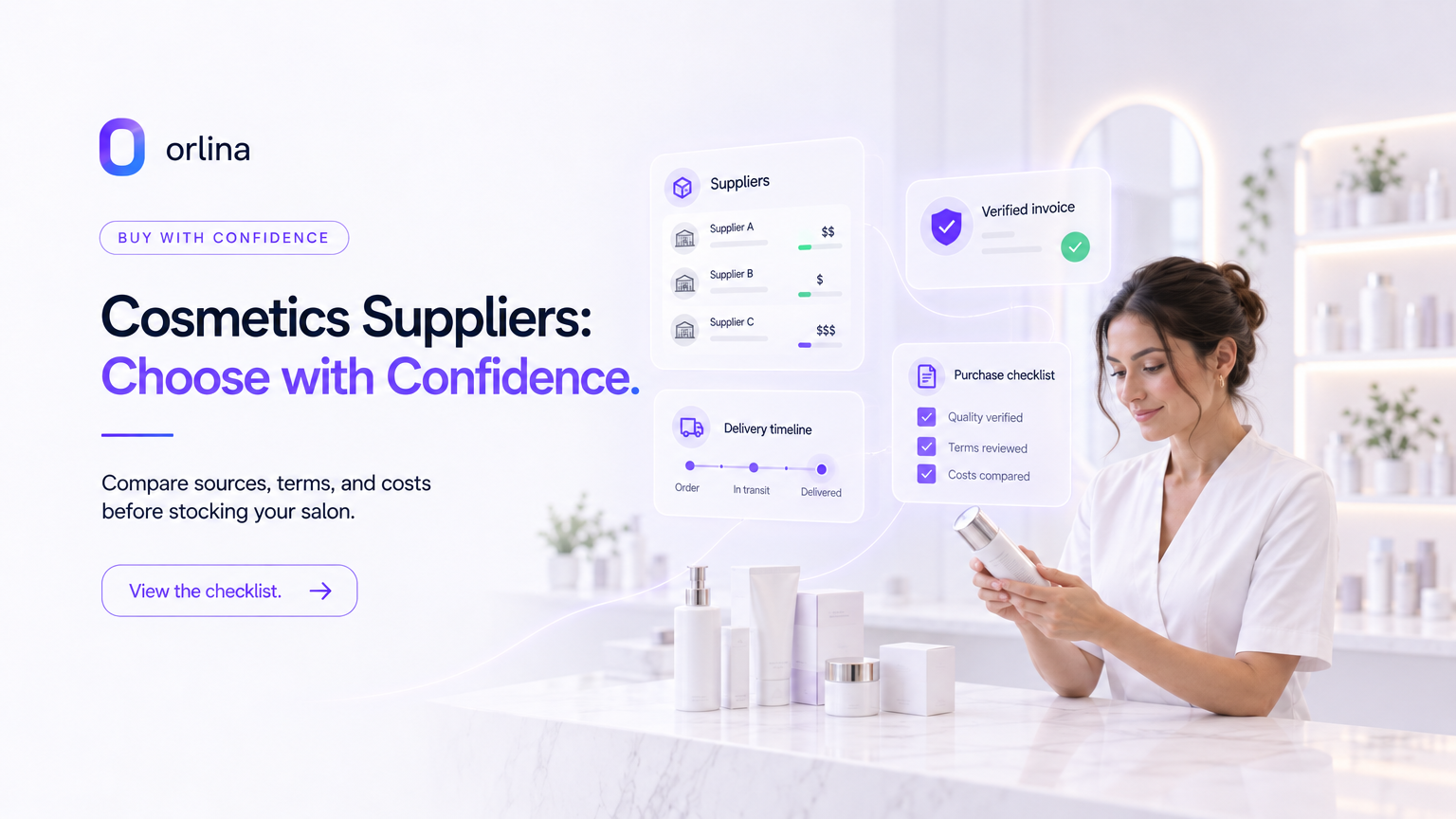
To choose cosmetic suppliers for your beauty salon safely, you must verify product registration with local health authorities (like the FDA in the US), insist on professional invoices for every purchase, and rigorously vet the distributor's market reputation. According to industry procurement standards, efficient supply chain management can reduce operational costs by up to 15% while preventing the use of counterfeit goods that endanger client health and business reputation.
Selecting commercial partners is a cornerstone of sustainability for any beauty entrepreneur. It is not merely about finding the lowest price point; it is about ensuring that every shampoo, colorant, or treatment applied at your station has a guaranteed provenance and adequate technical support. In this comprehensive guide, we will explore how to navigate the cosmetic distribution market, identify red flags, and structure a professional purchasing process.
The Importance of Provenance: Why the Invoice is Non-Negotiable
Many solo professionals and salon owners, in an attempt to cut costs, resort to "gray markets" or informal sellers who do not provide official invoices. This is the first and most dangerous mistake in supply management. An invoice is not just a tax document; it is your certificate of warranty and proof of the product's legal origin.
When you buy from a registered online scheduling system partner or authorized distributor, the invoice links the product batch to your business entity. Should a client experience a severe allergic reaction or if a product fails to deliver the results promised by the manufacturer, the invoice is the document that protects the salon legally. it allows liability to be shared with the manufacturer or distributor rather than resting solely on your shoulders.
Furthermore, the absence of an invoice usually signals diverted goods, stolen cargo, or, in the worst-case scenario, counterfeit cosmetics. In the beauty industry, the use of prohibited substances—such as excessive formaldehyde in smoothing treatments—is a frequent reality in clandestine products. Operating with suppliers who evade documentation exposes your salon to heavy fines from health inspectors and potential civil liability lawsuits.
How to Verify Regulatory Compliance
Before finalizing any order, especially with new or niche brands, it is essential to check the product's regulatory status. In the United States, while the FDA does not "approve" cosmetics before they go to market, they do regulate them under the Modernization of Cosmetics Regulation Act (MoCRA). Manufacturers must register their facilities and list their products.
To perform a safety check, you should:
- Check Ingredient Safety: Cross-reference ingredients with the Environmental Working Group (EWG) or similar safety databases.
- Verify Manufacturer Legitimacy: Ensure the brand has a verifiable physical address and a professional "Contact Us" portal.
- Look for Compliance Marks: Depending on your region, look for certifications like the "Leaping Bunny" for cruelty-free standards or specific organic certifications that validate quality claims.
According to the FDA, using products that are adulterated or misbranded is a violation of federal law. For a salon owner, this means that during an inspection, irregular stock can be seized and discarded, resulting in immediate financial loss and administrative sanctions.

Red Flags: How to Identify Counterfeit Cosmetics
The counterfeit market has become extremely sophisticated. However, clear signs still exist that an attentive professional can identify before making a payment. Client safety must always come first.
Excessively Low Prices
If a hair mask from a renowned international brand is being sold for 30% of the price charged by official distributors, be suspicious. There are no financial miracles. Prices significantly below the market average usually indicate expired products with tampered dates or "diluted" formulas where active ingredients are replaced by cheap fillers.
Packaging and Labeling
Meticulously analyze the packaging. Spelling errors, faded colors, crooked labels, or a lack of mandatory information (such as batch number, expiration date, manufacturer contact info, and full ingredient list) are indicators of piracy. Serious manufacturers invest heavily in packaging quality control.
Texture and Fragrance
If you are already familiar with a product, any change in density, color, or the characteristic scent should be a reason to stop using it. Fake products often have a residual smell of alcohol or cheap chemical essences used to mask the absence of original active ingredients.
Comparing Commercial Terms: The Total Cost of Ownership
A common mistake is looking only at the unit price in the catalog. To choose the best cosmetic supplier for your salon, you must calculate the Total Cost of Acquisition (TCA). This calculation involves variables that can turn a "cheap" product into an expensive mistake by the end of the month.
| Comparison Criterion | Supplier A (Official Distributor) | Supplier B (Online Marketplace) | Supplier C (Local Wholesaler) |
|---|---|---|---|
| Unit Price | $25.00 | $19.00 | $28.00 |
| Minimum Order | $150.00 | $20.00 | None |
| Shipping | Free (above minimum) | $15.00 | Self-pickup (gas cost) |
| Delivery Time | 2-3 business days | 7-14 business days | Immediate |
| Payment Terms | Net 30 days | Credit Card (upfront) | Cash or Debit |
| Technical Support | Workshops & Samples | None | Basic |
When analyzing the table, Supplier B seems cheaper at first glance ($19.00). However, once you add shipping costs and consider the long delivery timeframe—which could lead to lost revenue if you run out of stock—Supplier A or C might be more profitable choices for the daily management of a service provider.
The Risk of Dead Stock
Buying in large quantities to secure discounts is a valid but risky strategy. "Dead money" sitting on the shelf is one of the biggest enemies of a small business's financial health. If you buy 20 units of a color shade that rarely moves just to get a 10% discount, the opportunity cost of that tied-up capital exceeds the discount. There is also the risk of expiration. To prevent this, always monitor cosmetic expiration dates in the salon.
Delivery Times and Exchange Policies
Logistics is the heart of the partnership between a salon and its supplier. A distributor that delays deliveries disrupts your schedule. Imagine having a full day of highlights booked and the bleaching powder doesn't arrive on time. The cost of an empty chair due to a lack of materials is incredibly high.
Before registering a new supplier, ask:
- What is the procedure for damaged goods? (Leaking bottles, broken pumps).
- Who pays for return shipping?
- Is there a fast-track communication channel for emergencies?
A good supplier must have a clear, documented exchange policy that provides the agility a professional environment demands.

The Importance of Technical Support and Education
The best cosmetic suppliers for salons don't just sell products; they sell solutions. Leading brands typically offer staff training, workshops on new techniques, and samples for testing. This added value should be a major factor in your choice.
A distributor that invests in your knowledge helps your business grow. If you are torn between two suppliers with similar prices, choose the one committed to teaching your team how to extract the best results from that specific chemical formula. This reduces product waste and increases final client satisfaction.
Checklist for Evaluating Suppliers
To simplify your decision, use this checklist whenever you scout a new partner:
- Legal Regularity: Does the supplier have a registered business ID and provide professional invoices?
- Safety Compliance: Do products have visible batch numbers and ingredient lists on the label?
- Reputation: Have you searched for the distributor’s name on review sites or professional beauty forums?
- Physical or Digital Presence: Does the supplier have a traceable physical address or a secure e-commerce site (HTTPS)?
- Payment Options: Are the options (like credit card or invoiced billing) compatible with your cash flow?
- Sampling Policy: Does the supplier allow the purchase of trial kits or offer samples before a large order?
Integrating Purchases and Scheduling
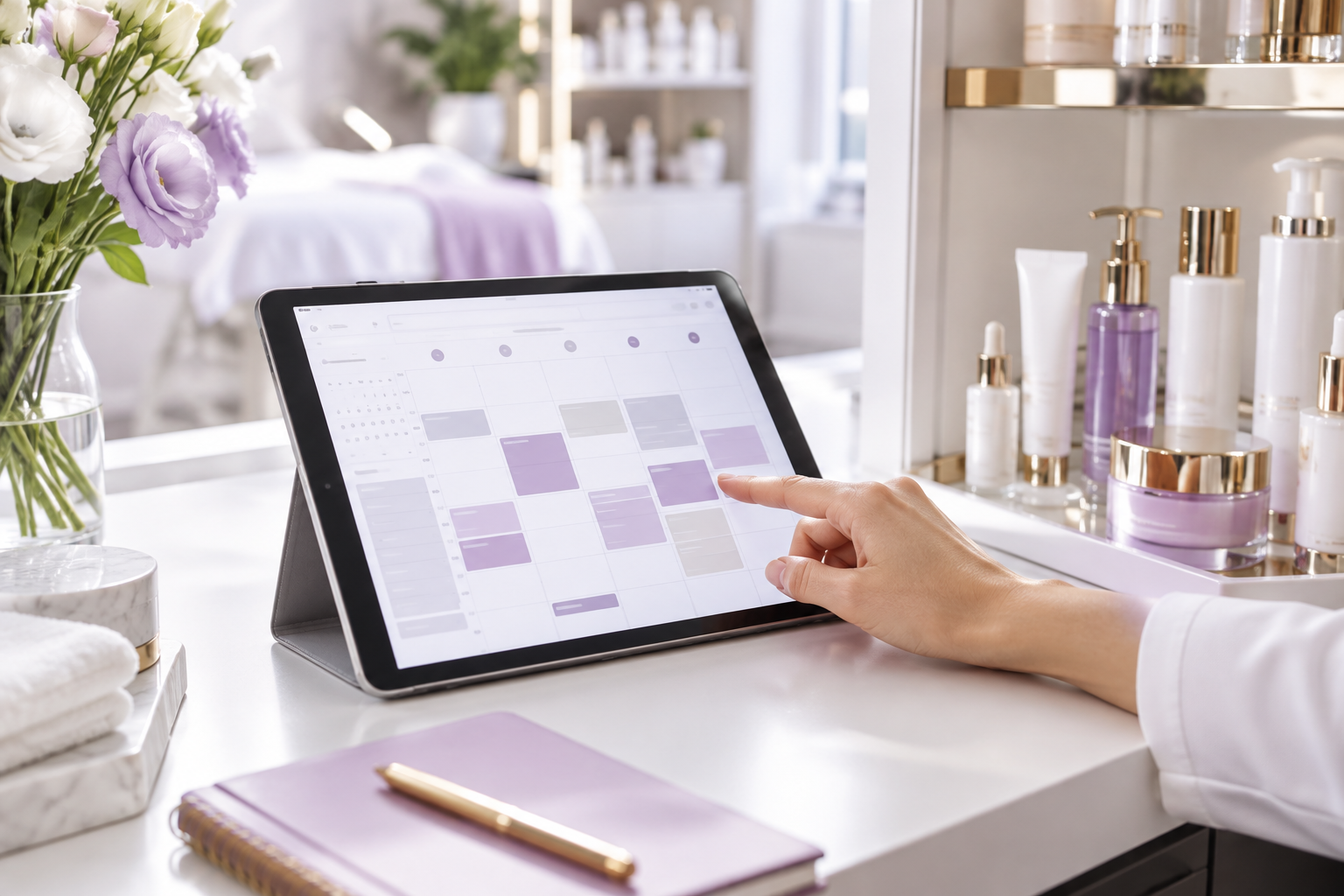
Excellent management connects the input of products with the output of services. If you use an online scheduling system, you can predict with greater accuracy when you will need to restock based on the frequency of services performed. For example, if you know you perform 50 coloring services a month, your order to the supplier will be much more assertive, avoiding shortages or excesses.
For professionals looking to optimize this organization further, using smart tools is the next step. Orlina provides an intuitive interface to manage your customer base and service history, which indirectly helps you understand your audience's consumption profile. Furthermore, Gabriel, Orlina's AI assistant, can help keep your schedule organized while you focus on curating the best products for your clients.
Remember that Orlina's Infinity plan ($99/month) offers unlimited appointments, which is ideal for salons in expansion mode that are increasing their purchasing volume. Having control of your schedule in the palm of your hand allows you to dedicate time to negotiating better terms and discounts with your distributors.
Conclusion: The Supplier as a Partner in Your Success
Choosing cosmetic suppliers for your salon is not a task that should be rushed or based solely on the lowest price found on Instagram. It is a strategic decision that impacts the safety of your clients, the longevity of your equipment, and the profitability of your business.
By prioritizing provenance, demanding invoices, and verifying regulatory compliance, you build a protective barrier for your career. The beauty market is driven by trust; and that trust begins with the products you choose to place on the hair or skin of those who sit in your chair.
Keep your supplier list updated, perform periodic quotes, and never compromise quality for a momentary saving that could cost your salon its reputation. For more tips on professionalizing your business management, check our guide on how to adjust prices in your beauty salon.
Frequently asked questions
How can I tell if a salon product is original?
Check for a professional invoice, the integrity of the packaging, and the presence of a batch number and expiration date. Compare the texture and scent with a sample you know is authentic, and be wary of prices that are significantly below market value.
Should I buy cosmetics from suppliers who don't provide invoices?
It is strongly discouraged. A professional invoice is your only legal guarantee of origin and quality. Without it, you assume total civil and criminal liability for any damage the product causes to a client, and you risk inventory seizure by health authorities.
Where can I check if a cosmetic is safe to use in my salon?
In the US, you can check the FDA’s website for safety alerts and recalls. You can also use databases like the EWG Skin Deep database to check the safety rating of specific ingredients listed on the product label.
What is the difference between an authorized distributor and a wholesaler?
An authorized distributor is licensed by the brand to represent and sell their products in a specific region, usually providing technical support and training. A wholesaler buys from various sources and resells in bulk, often without offering specialized support or direct manufacturer warranties.
How do I calculate the ideal minimum order to avoid dead stock?
Analyze your service history from the last 3 months. Purchase only what is necessary to cover the demand for the next month, adding a safety margin of 10% to 20%. Avoid buying large quantities of seasonal or low-turnover products just to get a volume discount.
This content was produced to help beauty professionals elevate the management level of their businesses. Discover Orlina’s solutions and see how online scheduling and artificial intelligence can transform your routine.
Link to FDA Cosmetics Regulation EWG Skin Deep Cosmetics Database Professional Beauty Association Business Resources